
Life & Property
When an Inherited Home Becomes a Family Decision
An inherited property often becomes a question for everyone who shares it. Ownership, memories, costs, and different ideas about the future all arrive at once — and the first useful step is rarely a sale.
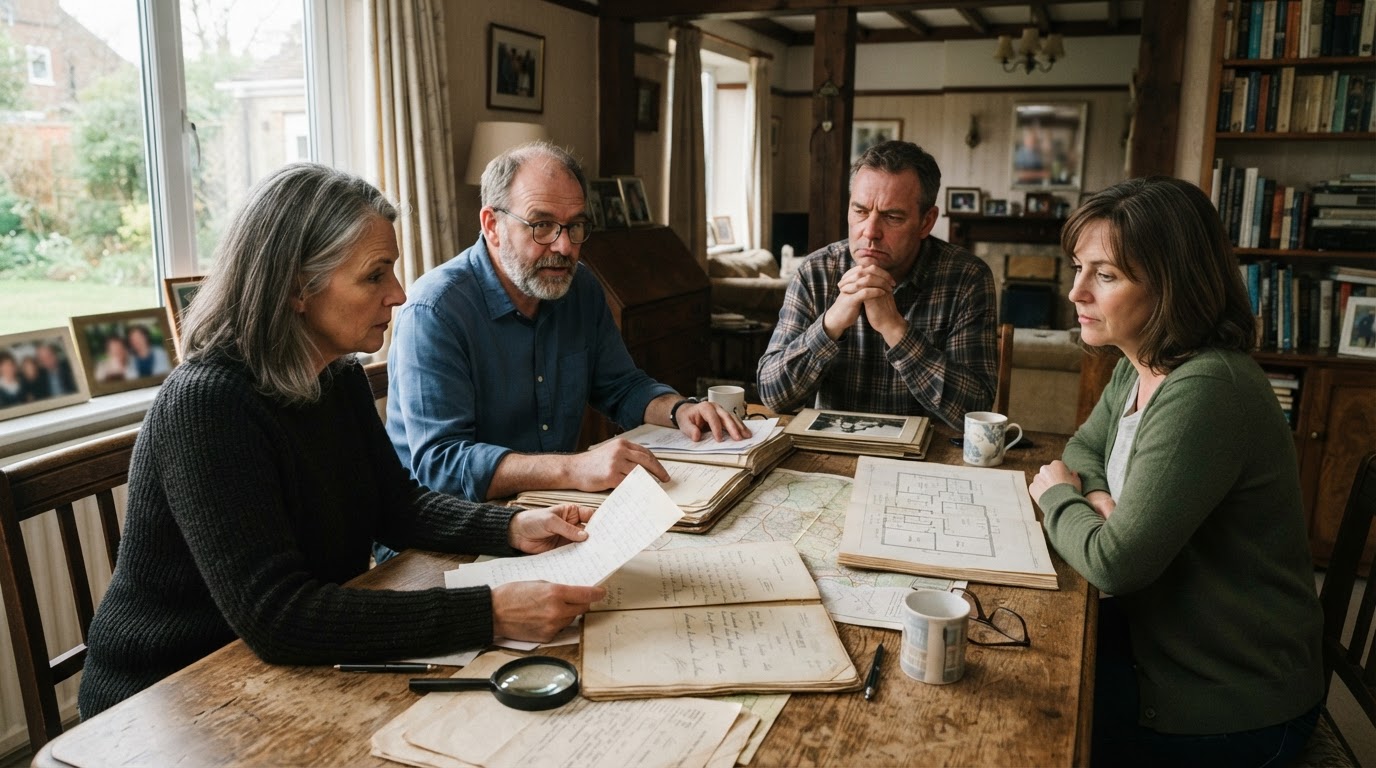
An inherited home often arrives alongside grief, paperwork, and a set of decisions no one prepared you for. And when more than one person inherits it, it rarely arrives as a single decision. It arrives as several — about ownership, about money, about memories, and about what a family property should become next. The instinct to resolve it quickly — to list it, sell it, or hand it off — is understandable. But the first useful step is rarely a transaction. It's understanding what you actually have, and who has a say in what happens to it.
It's a property decision and a family decision
When one person owns a home, the decisions are theirs. When a home passes to several heirs, the decisions become shared — and shared decisions move at the speed of the people making them. A sibling who lives nearby may feel the costs of the property more acutely. One who lives across the country may see it mainly as a financial matter. Another may feel the emotional weight of a childhood home more than the rest. None of those reactions are wrong. They're just different, and pretending they're the same is what turns a manageable conversation into a stuck one.
What usually needs to be understood first
Ownership and authority
Before any sale path makes sense, it helps to understand who legally owns the property and who has the authority to decide what happens to it. An estate, a trust, multiple heirs, or a probate process can each change what's possible and when. If that picture isn't clear yet, that's the first thing to clarify — not the listing price. A title held in different ways carries different rights, and a family's intentions don't automatically match the legal structure.
Condition and what the property needs
An inherited home may have been well maintained, or it may carry years of deferred upkeep. Repairs, vacancy, or a tenant in place can all affect which paths are practical. You don't need a full inspection to begin thinking clearly — just an honest sense of what the property needs and what it would take to address it.
Carrying costs
Holding a property isn't free. Property taxes, insurance, utilities, maintenance, and yard care continue whether the home is occupied or empty. If one sibling is covering those costs while others share the eventual proceeds, that imbalance is worth naming early — it's one of the most common sources of friction in inherited-property decisions.
What the property means
A home that's been someone's for decades carries more than market value. It holds the rooms where a family grew up, the garden a parent tended, the choices that shaped a life. For some heirs, that weight is an argument for keeping it. For others, it's exactly what makes holding on feel unbearable. Both are real, and neither should be overruled by the other.
When family members disagree
Disagreement is the normal state of inherited-property decisions, not a failure of them. One heir may want to sell and take the proceeds. Another may want to keep the home in the family. A third may want to rent it out. The path forward usually isn't to pick the loudest preference — it's to understand what each person is actually prioritizing, and to see whether those priorities can be met by more than one arrangement.
Sometimes that means a buyout: one heir purchases the others' shares and keeps the home. Sometimes it means a sale with proceeds divided according to the estate. Sometimes it means holding the property while a decision is made more deliberately. The right answer depends less on the property and more on the people — and on the legal and financial structure that governs who can decide what.
“An inherited home can be sold, kept, rented, or shared. The harder question is which of those the people involved can actually live with — together.”
The cost of waiting, and the cost of rushing
There's a quiet cost to holding an inherited property while a decision drags on — carrying costs accrue, deferred maintenance compounds, and an unoccupied home can deteriorate. But there's also a cost to rushing. A quick sale under family pressure may resolve the friction and still leave someone feeling that a meaningful asset — or a meaningful place — was given up before its full value was understood. Neither extreme is ideal. The useful middle is understanding the situation well enough to move deliberately rather than reactively.
Questions worth asking as a family
- Who legally owns the property, and who has authority to decide what happens to it?
- What does the property actually need — in repairs, maintenance, and management?
- What are the ongoing costs of holding it, and who is currently bearing them?
- What does each person most want to preserve — financial value, the home itself, family harmony, or something else?
- Which arrangements could honestly meet more than one of those priorities at once?
An inherited home may eventually be sold on the open market, sold through a direct offer, rented, or kept. But those are outcomes, not starting points. The starting point is understanding the situation clearly enough to choose a path that fits it — rather than forcing the situation to fit a transaction. If the next step isn't obvious, that's exactly where a conversation can begin: with the situation, not a sale.
This article provides general educational information, not individualized legal, tax, or estate-planning advice. Ownership, probate, and property decisions should be evaluated with appropriately qualified professionals based on individual circumstances.
A Guide for the Conversation the Whole Family Shares.
When a property decision belongs to more than one person, the conversation is the work. This guide organizes the questions a family faces when several adults share a decision about a home — who has a say, what each person needs, the money picture, how you talk together, and how a decision actually gets made. Check off what you’ve talked through, add notes, and download or print a clean copy to bring to the conversation. Nothing you enter is sent or stored.
Family Communication Guide
Coordinating Expectations Across Adult Family Members
When a property decision belongs to more than one person, the conversation is the work. This guide organizes the questions a family faces when several adults share a decision about a home — who has a say, what each person needs, the money picture, how you talk together, and how a decision actually gets made. It's an organizing tool, not a determination of what anyone should do.
Bring it to the family
Download or print a clean copy of this guide — with your notes and checkmarks — to bring to a family conversation. Nothing is sent or stored; the file is created in your browser.
Progress
0 / 22
prompts you’ve talked through. The goal isn’t to finish every item — it’s to surface what matters before the family commits to a path.
What this guide is — and isn’t
This guide provides general educational information, not individualized legal, tax, estate-planning, or real estate advice. Ownership, probate, and property decisions should be evaluated with appropriately qualified professionals based on individual circumstances.
Companion to: When an Inherited Home Becomes a Family Decision
Related paths
These Jumpcity capabilities may be relevant to this situation.
AI tools were used in preparing this article. Jumpcity is responsible for its published content.
Continue exploring
Guides & Tools for Your Next Step.
Explore practical resources to understand your options, compare tradeoffs, and prepare for what comes next.
Inherited a Property — Where Do You Start?
Organize what you know, what you owe, and the questions that deserve attention before a transaction.
Read the GuideInherited Property Next-Step Planner
Organize facts, documents, access, carrying expenses, and decision-makers in one place.
Open the PlannerWhen a Home Has More Than One Decision-Maker
Understand how shared ownership, different priorities, and family responsibilities affect property decisions — and how to move forward together.
Read the GuideShared Priorities Worksheet
Record each person's priorities, open questions, and points of agreement in one place — without forcing agreement or deciding who is right.
Open the WorksheetProperty Readiness Audit
Identify property conditions, access needs, missing information, and questions requiring professional review before deciding what comes next.
Open the ChecklistRelated insights
When an Aging Parent's Home Becomes a Family Concern
It often starts with a small worry — a fall, a cluttered stairway, a house that's harder to keep up. How can a family help while respecting a parent's independence and the home they've built?
When the Home You Love No Longer Fits the Life You're Living
The home that once made life easier can gradually become harder to live in. When that happens, the question isn't always whether to sell — it's whether the home can continue supporting the life you want to live.
Why a Changing Life Doesn't Always Mean Selling Your Home
When circumstances change, selling is often presented as the default. But it's one option among several — and understanding the alternatives is what turns a reaction into a decision. Selling is a choice, not an inevitability.
Useful context is worth sharing.
Not sure which path fits your situation?
What Happens After You Start
You share your situation. Complete the assessment — about three minutes, no obligation.
A person reviews it. Someone at Jumpcity reads what you shared to understand your goals.
We follow up with context. We reach out with relevant options and an appropriate next step.
A short, guided assessment · No obligation
A Path for Every Move.