
Life & Property
When the Home You Love No Longer Fits the Life You're Living
The home that once made life easier can gradually become harder to live in. When that happens, the question isn't always whether to sell — it's whether the home can continue supporting the life you want to live.
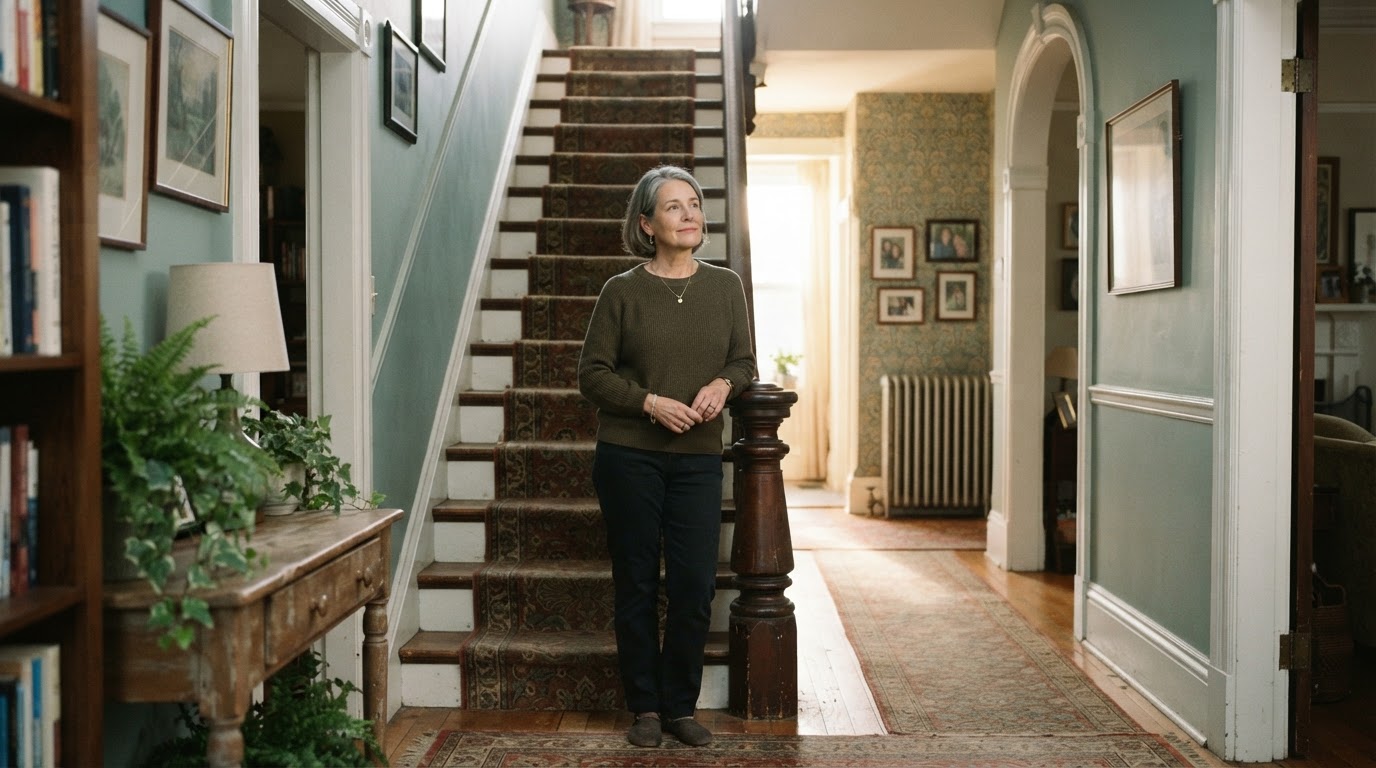
The home that once made life easier can gradually become harder to live in. When that happens, the question isn't always whether to sell. It's whether the home can continue supporting the life you want to live.
The house hasn't changed. Life has.
For years, the stairs were simply part of the house. Upstairs were the bedrooms. Downstairs were the kitchen, the living room, and the familiar spaces where everyday life unfolded. Then, one day, the stairs became something to think about.
Perhaps a knee replacement made climbing them uncomfortable. Maybe a spouse began having difficulty with balance. Or perhaps the laundry room, the yard, and the routine maintenance had gradually become more demanding than they used to be. Nothing dramatic necessarily happened. The house was still beautiful. The neighborhood was still familiar. The memories hadn't gone anywhere. But something had changed.
The home that once supported a family's life was beginning to ask more of the people living in it. It's a situation many homeowners eventually encounter, particularly those who have lived in the same property for decades. And it raises a question that is both practical and deeply personal: should we change the house to fit our lives, change how we live in the house, or consider living somewhere else?
Why staying home matters so much
A home is more than a building. It's where children grew up, where holidays were celebrated, where friendships formed, and where ordinary routines became part of a family's identity. For someone who has spent 20, 30, or 40 years in the same house, leaving can mean much more than changing an address. It can mean leaving behind a familiar community, trusted neighbors, a garden carefully tended over decades, or rooms that hold the memories of people who are no longer there.
That emotional attachment is neither unusual nor irrational. According to AARP's 2024 Home and Community Preferences Survey, 75% of adults age 50 and older want to remain in their current homes as they age, while 73% want to remain in their communities. Yet 44% anticipate relocating at some point. Those findings reveal an important tension: many people want to stay, even while recognizing that their circumstances may eventually require something different.
The challenge is not necessarily convincing someone to move. It's understanding what would make staying possible — and whether staying would continue to serve their needs.
When familiar features become everyday obstacles
A home's suitability can change gradually, and the changes tend to appear in several areas at once.
Physical accessibility
Stairs, narrow doorways, slippery surfaces, steep driveways, and bathrooms without accessible features can complicate daily activities. Accessibility isn't simply about accommodating a disability. It's about whether a home remains comfortable and practical as physical needs evolve.
Maintenance responsibilities
A large property can become increasingly demanding. Roof repairs, landscaping, exterior upkeep, seasonal maintenance, and unexpected mechanical failures all require time, money, or physical effort. For some households, these responsibilities remain manageable. For others, they gradually begin to outweigh the enjoyment of ownership.
Financial sustainability
A mortgage-free home isn't necessarily inexpensive to maintain. Property taxes, insurance, utilities, repairs, and ongoing improvements can consume a significant portion of retirement income. A home may represent substantial accumulated equity while still creating considerable monthly financial obligations.
Proximity to family and support
A home can remain physically comfortable while becoming geographically inconvenient. Adult children may live several states away. Healthcare providers may be farther than they once seemed. The question becomes whether the location continues to support the household's daily life.
Lifestyle compatibility
Sometimes the issue isn't physical ability or financial pressure. It's simply that the household has changed. Bedrooms sit unused. Entertaining spaces no longer serve their original purpose. The property may still be valuable, beautiful, and deeply loved — but its relationship to everyday life has changed.
The important distinction between staying and staying well
Remaining in a familiar home can provide comfort, continuity, and independence. But remaining in a home and living comfortably in that home are not always the same thing. Consider a homeowner who has begun avoiding the second floor because the stairs are difficult. Technically, that homeowner is still living independently. But if the primary bedroom, bathroom, or other essential spaces are upstairs, daily life may become increasingly restricted.
That limitation matters. The Centers for Disease Control and Prevention identifies falls as the leading cause of injury among adults age 65 and older, with more than 14 million older adults reporting a fall each year. This doesn't mean that every two-story home is unsafe or that older homeowners should move. It means the physical environment deserves thoughtful consideration. The National Institute on Aging recommends measures such as improved lighting, secured flooring, grab bars, nonslip surfaces, and appropriate access improvements to help older adults remain safer at home.
The objective isn't to eliminate every possible risk. It's to understand whether reasonable changes can help the home continue supporting its occupants. A good decision begins by separating what the homeowner wants from what the property can realistically provide.
Three different ways forward
When a home no longer fits the way someone lives, three broad possibilities often deserve consideration. They are not mutually exclusive, and none is automatically the right answer.
1. Adapt the home
Sometimes the property itself can change. A homeowner who struggles with stairs might explore a stairlift. Another might renovate a bathroom, improve entrances, widen doorways, or convert an existing room into a main-floor bedroom. Other adaptations may be comparatively modest: improving lighting and removing trip hazards, installing grab bars, replacing difficult door hardware, adding ramps, or reducing maintenance through landscaping changes or outside services.
These modifications can preserve something important: the ability to remain in a familiar place. But not every modification is equally practical. A stairlift may help someone move between floors, but its suitability depends on the staircase, the person's mobility, and their ability to use the equipment safely. A major renovation may solve an immediate problem while leaving other challenges unresolved. Before committing to expensive changes, it's worth asking whether the improvement addresses the underlying need or only one visible symptom. An occupational therapist, qualified accessibility specialist, or experienced contractor may help evaluate the options.
“Can the home be reasonably adapted to support the next stage of life?”
2. Change how the home is used
Sometimes the answer requires less construction and more rethinking. A formal dining room could become a main-floor bedroom. An upstairs guest room might no longer need regular use. Laundry could potentially be relocated to a more accessible area. Household responsibilities could be simplified through maintenance services, landscaping assistance, or periodic in-home support.
These changes may allow homeowners to preserve their surroundings while reducing everyday demands. Reorganizing a home also has limits, though. Moving a bedroom downstairs may not solve the absence of a full bathroom nearby. Hiring outside help may become financially burdensome over time. The goal is to determine whether a different arrangement can make everyday life genuinely easier.
“Could changing how the home functions make staying practical?”
3. Consider a different home
For some households, moving eventually becomes a reasonable option — not necessarily because the existing home is undesirable, but because another property could better support the way they want to live. A single-level home may reduce accessibility concerns. A smaller property may lower maintenance responsibilities. A home closer to family may provide more support and connection. A different neighborhood may offer better access to healthcare, transportation, or community activities.
Moving also creates new financial questions. A longtime homeowner may have substantial equity but face higher purchase prices, moving expenses, property taxes, insurance, or borrowing costs in a replacement home. A smaller house does not automatically mean a less expensive lifestyle. The decision deserves more than a comparison of square footage.
“Would another home provide a meaningful improvement in daily life, after accounting for the financial and emotional costs of moving?”
The financial side of an emotional decision
One of the most important considerations is the difference between a home's value and its usefulness. A property may have appreciated significantly over several decades. That accumulated equity can create possibilities — it may help finance accessibility improvements, support a move to a more suitable property, or provide financial flexibility during retirement. But equity is not the same as readily available cash. Accessing it through a loan introduces costs and obligations. Selling may involve transaction expenses, moving costs, potential taxes, and the price of replacement housing.
Homeowners should also consider the cost of remaining. Imagine a household comparing two possibilities: remaining in the current home (making accessibility improvements, hiring additional maintenance help, and continuing existing ownership expenses) or moving to a more suitable property (selling, purchasing a single-level home, and potentially reducing some maintenance demands — but incurring transaction costs and different ongoing housing expenses). Neither option can be evaluated solely by comparing the cost of renovations with the sale price of the existing property. A more meaningful comparison considers the total cost, practical benefits, future flexibility, and risks of each choice. The least expensive option today may not be the most sustainable option five years from now. And the option that produces the most money may not produce the best living arrangement.
When family members see the situation differently
These decisions often involve more than one generation. An adult child may worry about a parent's safety. A parent may feel that those concerns threaten their independence. One family member may favor renovations. Another may believe downsizing is inevitable. Someone else may be concerned about finances or the responsibilities of providing support. Each perspective can come from a legitimate concern, but those concerns are not necessarily the same.
A productive family conversation begins by identifying the actual problem. Is the concern about stairs? About isolation? About maintaining the property? About finances? Or about what could happen if someone's health or mobility changes? These questions matter because different problems require different solutions. A stairlift cannot solve loneliness. A smaller home cannot automatically resolve financial uncertainty. And selling a property does not guarantee that the next living arrangement will be better. Where possible, the homeowner's preferences, autonomy, and priorities should remain central to the decision.
The risk of waiting until a decision becomes urgent
Many property transitions begin as questions long before they become urgent. A homeowner notices that stairs are getting harder. A spouse begins handling more maintenance. An adult child starts visiting more frequently to help with everyday tasks. For a while, everyone adjusts. Then an unexpected event changes the timeline — an injury, an illness, a financial disruption, or the loss of a spouse may turn a decision that could have been considered gradually into one that requires immediate attention.
Under pressure, choices may become more limited. There may be less time to compare contractors, evaluate housing alternatives, prepare a property, arrange financing, or coordinate family responsibilities. This is one reason early planning matters — not because everyone should move before they need to, but because understanding possible paths before a crisis can preserve flexibility. The best time to understand your options is often before you are forced to choose among them.
Five questions worth asking
- What specifically has become difficult — physical, financial, logistical, emotional, or some combination?
- Can those challenges be addressed within the existing home, and for how long would the changes remain useful?
- What would a different property meaningfully improve — maintenance, accessibility, proximity to family, financial flexibility?
- What would each option require in expenses, time, disruption, and future obligations?
- What matters most to the household — independence, community, lower costs, closeness to family, familiar routines?
A home can still be loved without remaining the right fit
There is no universal age at which someone should downsize. There is no rule that a two-story house must be abandoned. And there is no guarantee that moving will make life easier. For some households, thoughtful improvements can make a longtime home comfortable for many more years. For others, changing how the home is used may provide the flexibility they need. And for some, a move may open the door to a more manageable, connected, or fulfilling next chapter.
What matters is recognizing that these are different possibilities worth understanding. The decision doesn't have to begin with a real estate listing. It can begin with a conversation about daily life — what is working, what has become difficult, what might change in the years ahead, and what a better living arrangement would actually look like. Because sometimes the most important property decision isn't about finding a different house. It's about finding a way for home to continue supporting the life you want to live.
This article provides general educational information, not individualized legal, tax, financial, or real estate advice. Accessibility, healthcare, and property decisions should be evaluated with appropriately qualified professionals based on individual circumstances.
Related paths
These Jumpcity capabilities may be relevant to this situation.
AI tools were used in preparing this article. Jumpcity is responsible for its published content.
Continue exploring
Guides & Tools for Your Next Step.
Explore practical resources to understand your options, compare tradeoffs, and prepare for what comes next.
Is It Time to Downsize?
Explore lifestyle fit, housing expenses, and the difference between equity and cash after a move.
Read the GuideDownsizing Cost Comparison
Compare current and next-home ownership costs, estimated sale proceeds, purchase expenses, and cash remaining after a modeled move.
Compare OptionsKeep-or-Sell Scenario Worksheet
Compare what selling your property could make available today with what keeping it might require — and potentially produce — over time. Rental cash flow, estimated equity, and estimated sale proceeds are shown as three different measures.
Open the WorksheetProperty Readiness Audit
Identify property conditions, access needs, missing information, and questions requiring professional review before deciding what comes next.
Open the ChecklistRelated insights
When an Aging Parent's Home Becomes a Family Concern
It often starts with a small worry — a fall, a cluttered stairway, a house that's harder to keep up. How can a family help while respecting a parent's independence and the home they've built?
When Downsizing Is About More Than Square Footage
Downsizing is often treated as a math problem — fewer rooms, smaller payment. But the homeowners considering it are usually after something less measurable: freedom, simplicity, proximity, or a life that fits differently.
When an Inherited Home Becomes a Family Decision
An inherited property often becomes a question for everyone who shares it. Ownership, memories, costs, and different ideas about the future all arrive at once — and the first useful step is rarely a sale.
Useful context is worth sharing.
Not sure which path fits your situation?
What Happens After You Start
You share your situation. Complete the assessment — about three minutes, no obligation.
A person reviews it. Someone at Jumpcity reads what you shared to understand your goals.
We follow up with context. We reach out with relevant options and an appropriate next step.
A short, guided assessment · No obligation
A Path for Every Move.