
Life & Property
When a Marriage Ends, What Happens to the Family Home?
Separation and divorce turn a shared home into a shared decision about money, timing, and what comes next. The home can be kept, sold, refinanced, or held — and the right answer depends on more than its value.
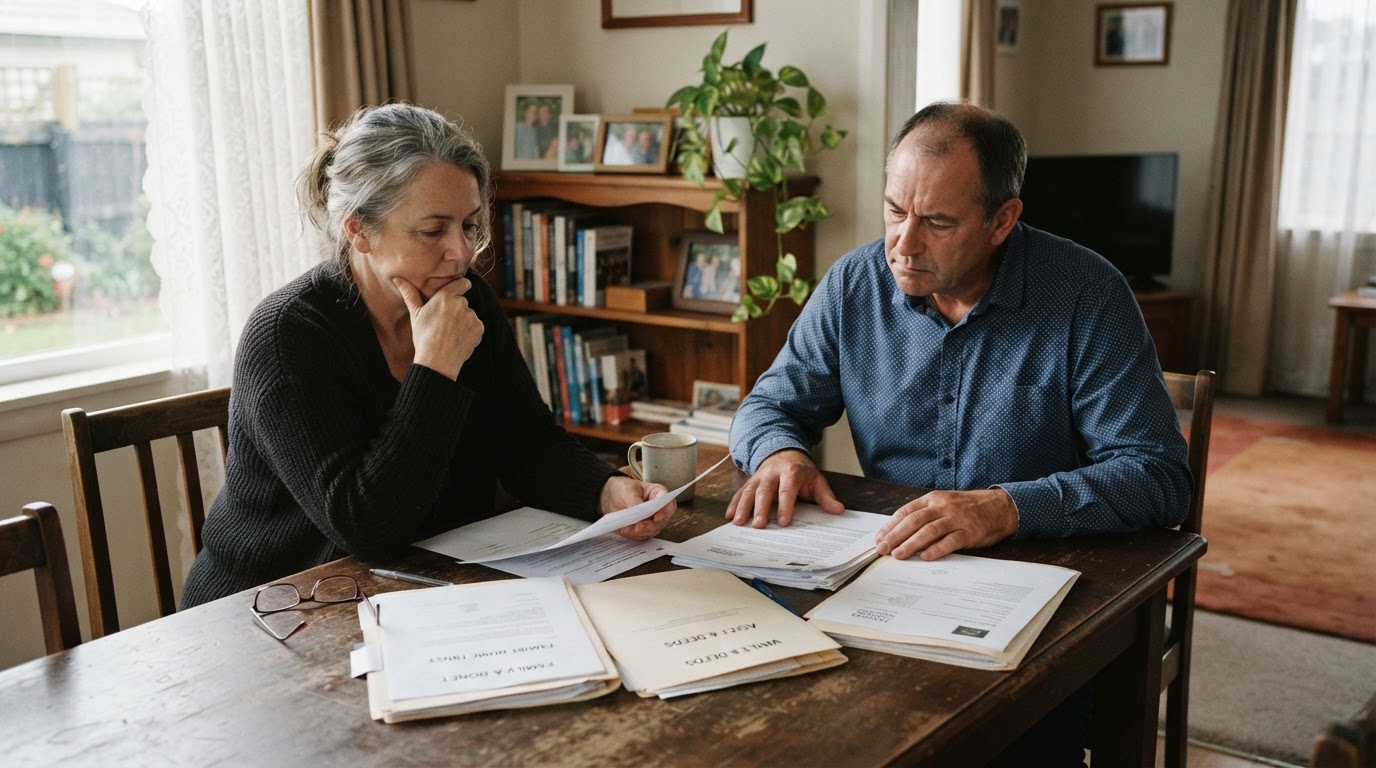
When a marriage ends, the family home becomes something it wasn't before: a decision that has to be made by people who may not agree, on a timeline they may not control, about an asset that carries both money and meaning. It's one of the most consequential parts of a separation, and one of the easiest to get wrong by rushing toward a simple answer. The home can be kept by one person, sold and divided, refinanced, transferred, or held for a time — and which of those makes sense depends on more than the house.
It's a legal question, a financial one, and a human one
Three layers tend to arrive at once. The legal layer is about ownership and authority — whose name is on the title, whose name is on the mortgage, and what a separation agreement or court order requires or allows. The financial layer is about what the home costs to carry, what it's worth, and what each option leaves each person with. The human layer is about stability — for children, for routines, for a sense of continuity at a moment when continuity is already disrupted.
Those layers interact. A decision that makes sense financially may be untenable legally until a mortgage is refinanced or a deed is transferred. A decision that preserves stability for children may strain one person's finances. The useful approach is to look at all three honestly rather than collapsing them into one.
The options, and what each actually requires
One person keeps the home
One spouse may buy out the other's interest and remain in the home. That can preserve continuity — especially where children or schools are involved — but it usually requires refinancing the mortgage into one name and structuring a buyout that reflects the home's equity and any offsetting assets. It also means one person takes on the full carrying cost: taxes, insurance, maintenance, and upkeep, alone.
The home is sold
A sale converts a shared asset into divided proceeds. It can be the cleanest resolution when neither person can or wants to carry the home alone, or when a fresh start is the priority. It also means timing a sale, preparing the property, agreeing on price and terms, and finding what each person does next — sometimes two separate housing decisions, each with its own costs.
The home is held, for now
Sometimes the right answer is to defer the decision — keeping the home jointly for a period, often until children reach a milestone, a market improves, or finances reorganize. Holding can preserve stability in the short term, but it keeps both people tied to a shared asset, a shared mortgage, and shared decisions about maintenance, sale, and risk. It's a real option, not a failure to decide — but it deserves its own honest accounting.
The home is rented
In some situations, renting the property out while one or both people live elsewhere can cover carrying costs and defer a sale. It introduces a different set of responsibilities — tenants, management, and the economics of being a landlord — and may not be the right fit for a household already navigating a lot of change.
“The home can be kept, sold, refinanced, or held. The right answer depends less on the house and more on what the people involved can sustain — separately and together.”
What makes this harder than it looks
These decisions rarely happen in a calm vacuum. They unfold alongside the emotional weight of a separation, the logistics of two households becoming one arrangement, and often the pressure of attorneys, deadlines, and the need to move quickly. Under that pressure, a sale can look like the simplest answer even when it isn't the best one. A buyout can look impossible until the financing is actually explored. And the cost of keeping the home — which one person may bear while the other's name is still on the mortgage — can quietly create new problems if it isn't understood up front.
The most common mistake is confusing the first option that seems workable with the one that actually fits the situation. A more useful habit is to slow down enough to understand what each person needs from the outcome — financial security, stability, a clean break, time — and then to see which arrangement can honestly provide it.
Questions worth asking
- What does the legal structure — title, mortgage, and any agreement — actually allow, and what does it require?
- Can one person carry the home alone, and for how long?
- What does each option leave each person with, after costs and the cost of the next step?
- What does stability require — for children, for routines, for the months ahead?
- Which arrangement can both people actually sustain, not just agree to in the moment?
This article provides general educational information, not individualized legal, tax, or financial advice. Ownership, title, mortgage, and separation decisions are jurisdiction-specific and should be evaluated with qualified legal and financial professionals based on individual circumstances.
Related paths
These Jumpcity capabilities may be relevant to this situation.
AI tools were used in preparing this article. Jumpcity is responsible for its published content.
Continue exploring
Guides & Tools for Your Next Step.
Explore practical resources to understand your options, compare tradeoffs, and prepare for what comes next.
When a Home Has More Than One Decision-Maker
Understand how shared ownership, different priorities, and family responsibilities affect property decisions — and how to move forward together.
Read the GuideShared Priorities Worksheet
Record each person's priorities, open questions, and points of agreement in one place — without forcing agreement or deciding who is right.
Open the WorksheetKeep-or-Sell Scenario Worksheet
Compare what selling your property could make available today with what keeping it might require — and potentially produce — over time. Rental cash flow, estimated equity, and estimated sale proceeds are shown as three different measures.
Open the WorksheetProperty Readiness Audit
Identify property conditions, access needs, missing information, and questions requiring professional review before deciding what comes next.
Open the ChecklistRelated insights
When an Inherited Home Becomes a Family Decision
An inherited property often becomes a question for everyone who shares it. Ownership, memories, costs, and different ideas about the future all arrive at once — and the first useful step is rarely a sale.
When Your Family Outgrows the House That Once Fit Perfectly
A home that fit a household for years can start to feel small as the people inside it change. The question isn't always whether to move — it's whether the home can grow with the family living in it.
When the Home You Love No Longer Fits the Life You're Living
The home that once made life easier can gradually become harder to live in. When that happens, the question isn't always whether to sell — it's whether the home can continue supporting the life you want to live.
Useful context is worth sharing.
Not sure which path fits your situation?
What Happens After You Start
You share your situation. Complete the assessment — about three minutes, no obligation.
A person reviews it. Someone at Jumpcity reads what you shared to understand your goals.
We follow up with context. We reach out with relevant options and an appropriate next step.
A short, guided assessment · No obligation
A Path for Every Move.