
Life & Property
When Your Family Outgrows the House That Once Fit Perfectly
A home that fit a household for years can start to feel small as the people inside it change. The question isn't always whether to move — it's whether the home can grow with the family living in it.
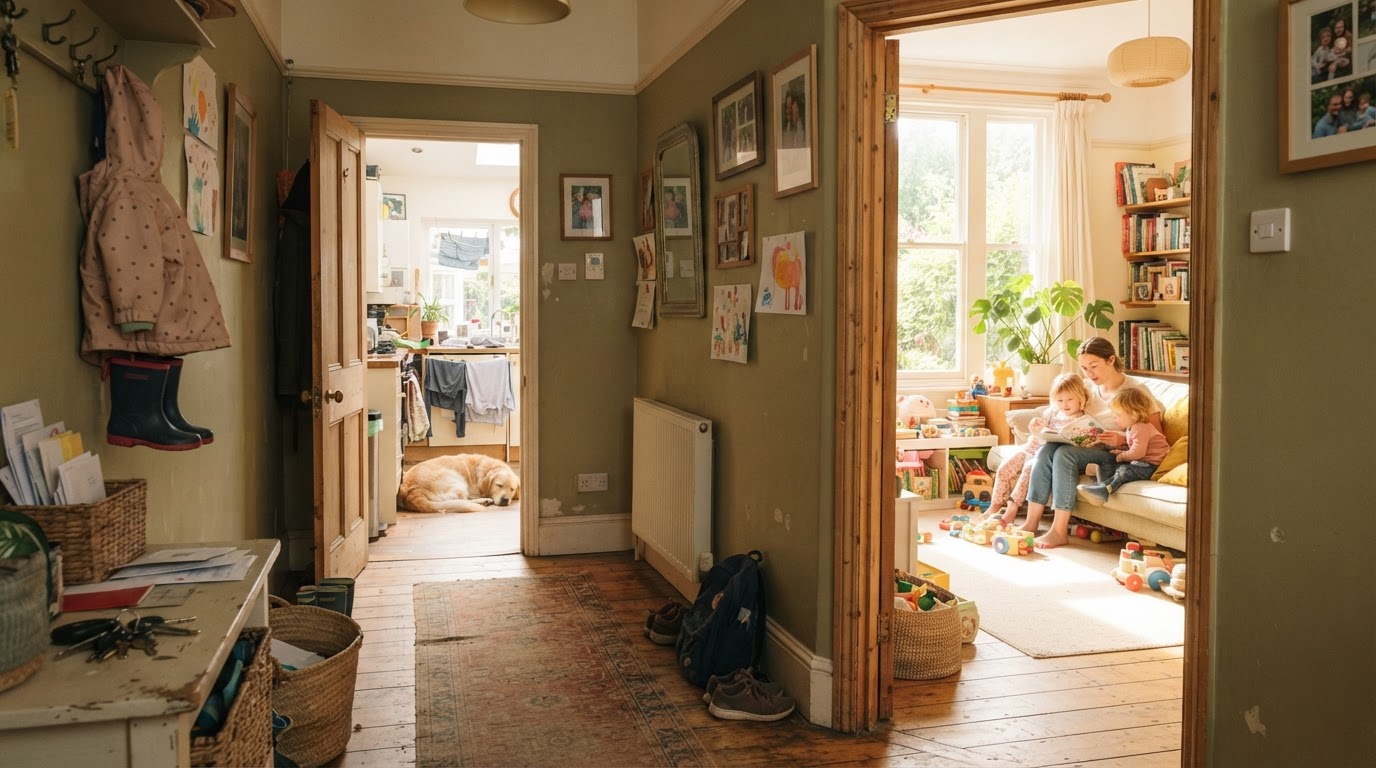
It usually happens gradually. A second child arrives, and the room that was once a study becomes a nursery. A teenager needs a space of their own, and the house that comfortably held everyone starts to feel like it's holding its breath. A parent working from home turns a corner of the living room into an office, and suddenly the layout that worked for years doesn't anymore. A home that fit a family for years can start to feel small not because it shrank, but because the people inside it changed.
Outgrowing a home isn't only about bedrooms
Square footage is the easiest way to talk about space, but it's rarely the actual problem. The harder questions are about how a home supports the life inside it: whether there's a place to work, a place for a child to sleep and study, a way to have privacy when it's needed, and a layout that lets a household function without everyone crowding into the same room. A house can be technically large enough and still not fit — just as a house can be smaller than the last one and feel like exactly the right size.
The mismatch tends to show up in the ordinary moments. Two meetings at the same time. A teenager who needs quiet and a younger sibling who doesn't. A kitchen that no longer holds the way the household actually cooks and eats together. None of those is an emergency. But together, they describe a home that's stopped keeping up with the people living in it.
Three possibilities worth weighing
Adapt the home you're in
Sometimes the answer is changing the house rather than changing the address. A finished basement, a reconfigured layout, an addition, or even a more modest reorganization of existing space can give a growing household the room it needs without the cost and disruption of a move. This can preserve a community, a school district, and a network of neighbors that matter — especially for children.
But adaptation has limits. A home that can't practically be expanded, a lot that won't support it, or a budget that can't absorb it can all make renovation the wrong answer even when it's the preferred one. And renovation that solves today's squeeze without addressing next year's can simply postpone the same decision.
Reorganize how the home is used
Before adding space, it's worth asking whether the existing space could be used differently. A formal dining room that's rarely used might become a bedroom. A garage might be converted. Rooms might be reassigned as children's needs change. Sometimes the home has the room; it just doesn't have the right arrangement of it. This is often the least disruptive option, and the one most easily revisited as the household keeps changing.
Move to a home that fits differently
For some families, the honest answer is a different home. A growing household may need a layout, a yard, a school district, or a location that the current property simply can't provide. A move can also be the moment to adjust commuting, proximity to family, or the kind of community the household wants for the years ahead.
A move brings its own costs — financial, logistical, and emotional. The family that moves for more space may take on a larger mortgage, a longer commute, or a different set of tradeoffs. And a larger home doesn't guarantee a better fit; the question is whether the new arrangement genuinely supports the life the household is building, not just whether it has more rooms.
“More space and a better fit aren't the same thing. A home can have both, or neither.”
The timing matters as much as the space
Growing households rarely stay one size for long. A family that's bursting at the seams today may be approaching the years where bedrooms start emptying again. The decision to add space, reorganize, or move should account for where the household is headed — not only where it is right now. A home that solves this year's squeeze but can't adapt to the next stage may simply move the problem forward. And a move undertaken at the wrong moment can cost more in disruption and transaction expense than the space was worth.
School timing, a parent's job, the age of the children, and the state of the local market all shape when a move makes sense and when staying — even an imperfect staying — is the better call for now. The useful frame is to plan for the household as it's becoming, not only as it is today.
Questions worth asking
- What's actually not working — space, layout, privacy, location, or some combination?
- Could the existing home be reorganized or adapted to fit the household as it is becoming?
- What would a different home provide that the current one can't — and what would it cost or give up?
- How long is this household likely to stay at this size and in this stage?
- What does each option mean for schools, community, commute, and the life outside the house?
This article provides general educational information, not individualized financial, tax, or real estate advice. Renovation, financing, and relocation decisions should be evaluated with appropriately qualified professionals based on individual circumstances.
Related paths
These Jumpcity capabilities may be relevant to this situation.
AI tools were used in preparing this article. Jumpcity is responsible for its published content.
Continue exploring
Guides & Tools for Your Next Step.
Explore practical resources to understand your options, compare tradeoffs, and prepare for what comes next.
Downsizing Cost Comparison
Compare current and next-home ownership costs, estimated sale proceeds, purchase expenses, and cash remaining after a modeled move.
Compare OptionsPlanning a Move Between States
Understand how your current home, next home, financing, and timing connect when a move crosses state lines — and how to approach the decisions without assuming a sale or a sequence.
Read the GuideMove Timeline Builder
Generate a suggested planning sequence back from a target move date you choose.
Build Your TimelineTotal Move Budget Estimator
Estimate movers, packing, storage, travel, temporary housing, and setup costs. Add a contingency to understand your total moving budget.
Estimate Moving CostsRelated insights
When a Marriage Ends, What Happens to the Family Home?
Separation and divorce turn a shared home into a shared decision about money, timing, and what comes next. The home can be kept, sold, refinanced, or held — and the right answer depends on more than its value.
When Downsizing Is About More Than Square Footage
Downsizing is often treated as a math problem — fewer rooms, smaller payment. But the homeowners considering it are usually after something less measurable: freedom, simplicity, proximity, or a life that fits differently.
When the Home You Love No Longer Fits the Life You're Living
The home that once made life easier can gradually become harder to live in. When that happens, the question isn't always whether to sell — it's whether the home can continue supporting the life you want to live.
Useful context is worth sharing.
Not sure which path fits your situation?
What Happens After You Start
You share your situation. Complete the assessment — about three minutes, no obligation.
A person reviews it. Someone at Jumpcity reads what you shared to understand your goals.
We follow up with context. We reach out with relevant options and an appropriate next step.
A short, guided assessment · No obligation
A Path for Every Move.