
Ownership Pressures
When a Home No Longer Fits the Household
A home can be in perfect condition and still no longer fit the people living in it. Explore how aging, accessibility, empty nesting, and changing family needs can turn a familiar home into a property decision.
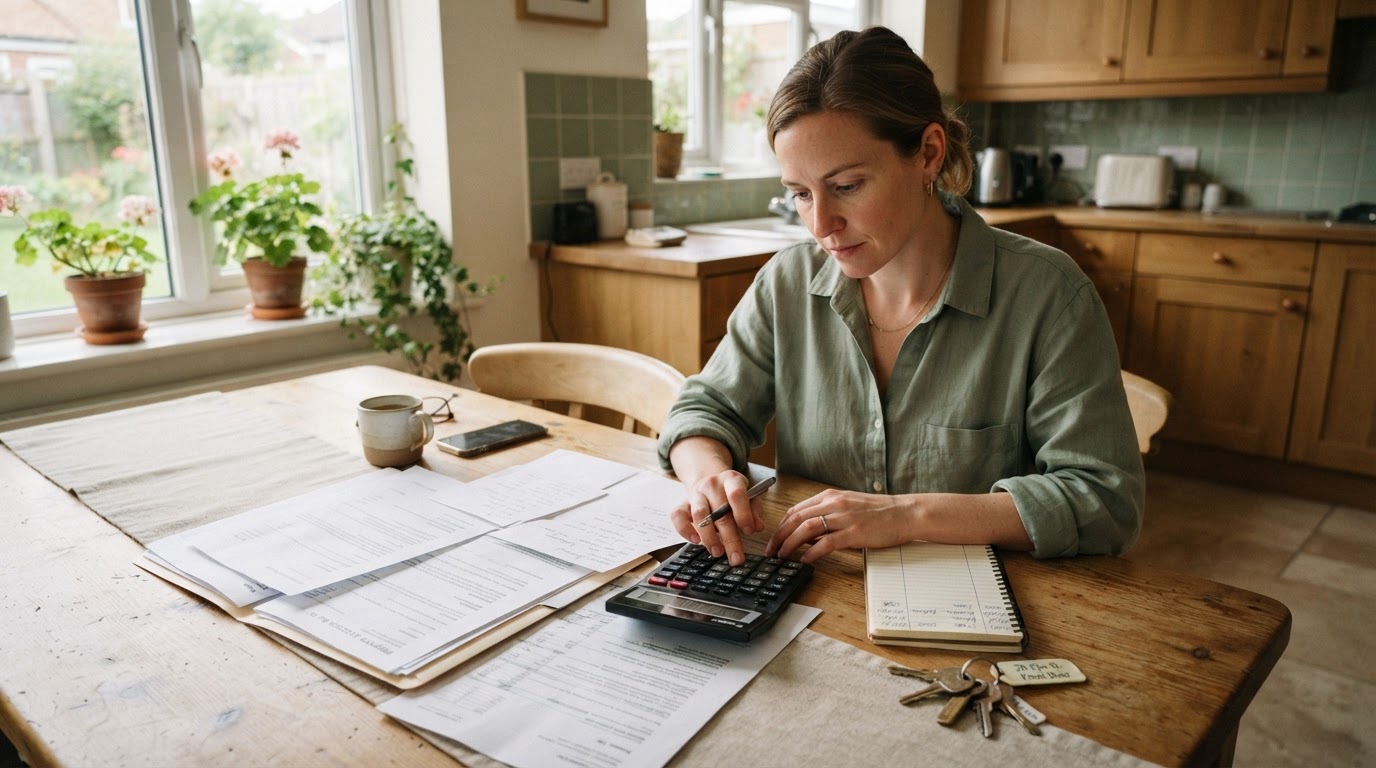
The home is exactly the same. The household is not. A house that was chosen for a young family — the bedrooms upstairs, the yard, the neighborhood with the right schools — may still be a perfectly good house and no longer a good fit for the people living in it. The children grew up and moved out, and the bedrooms that were once full are now used a few times a year. A flight of stairs that was simply part of the layout has become something to think about. A yard that was a place to play is now a weekend of work. A neighborhood that was once the right distance from everything is now, for a household whose needs have changed, the wrong distance from something — a hospital, a child, a community, a simpler kind of daily life. Nothing has gone wrong with the home. But the home and the life inside it have begun to drift apart.
Fit is not the same as condition
A home can be well-maintained, valuable, and beautiful, and still be the wrong home for the household it currently houses. The question of fit is not a question of repair. It is a question of whether the home still supports the life being lived in it — the daily routines, the physical needs, the household's size, the proximity that matters, and the time and cost required to keep it. These things change, often gradually, and the home that was once the right answer can become a home that the household keeps more out of continuity than because it still serves them. Recognizing that a home no longer fits is not a failure of the home or of the household. It is a recognition that a life has moved, and that the property may not have moved with it.
“The house hasn't changed. The household has. And a home that fits a life it no longer holds is not the wrong house — it is the wrong time for it.”
How fit changes over a life
The ways a home can stop fitting are several, and they often appear together. Accessibility can change: stairs, doorways, bathrooms, and entryways that were once incidental can become obstacles as physical needs evolve, and a home that was comfortable at one stage of life can become difficult at another. Maintenance can change: a property that a household managed comfortably for years can become more than its owners want to keep up with, as the time, cost, or physical effort required to maintain it grows. Space can change: a home that held a full household may now hold more rooms than anyone uses, and the upkeep of those rooms — cleaning, heating, furnishing — continues regardless. And location can change: a community that was the right place to raise a family may be the wrong place to age, to be near support, or to live the simpler kind of life the household now wants. None of these is a defect. Each is a way the home and the life have stopped aligning.
The emotional weight of a familiar mismatch
What makes these decisions difficult is that the home is not only a property. It is the place where a household lived through the years the home was the right fit — the rooms where the children grew up, the kitchen where the holidays happened, the garden someone tended for decades. A home can be objectively too large, too costly, or too difficult to maintain, and still be the last thing the household wants to leave. The decision is not only financial or practical. It is the decision to give up a place that holds a life the household has already lived, in exchange for a place that fits the life they are living now. That trade is real, and it deserves to be made with both sides of it in view — the cost of staying in a home that no longer fits, and the meaning of leaving one that still holds a household's history.
Questions worth asking
- What does the household actually use the home for now, compared to when it was chosen — and how much of the home is serving that use?
- Has anything about the home become harder — stairs, maintenance, access, distance from what matters — that was not hard before?
- If the household stays, what would it take to make the home fit the life being lived in it now, and is that realistic?
- If the household moves, what would a better-fitting home actually provide — less maintenance, accessibility, proximity, space, or cost?
- What is the emotional weight of leaving this home, and how does that weigh against the practical cost of staying in a home that no longer fits?
- Is the decision being made by the household, or by the home — and is the home being kept because it serves the household or because the household is used to it?
A good home at the wrong time
A home that no longer fits is not a failed home. It is a home whose time, for this household, may be passing — or a home that could fit again with the right changes. The work is to see the situation clearly enough to choose: to adapt the home, to change how it is used, to stay because the fit can be restored, or to move because the fit will not return. What a household should not do is hold a home that no longer serves them simply because the alternative is unfamiliar, or sell a home that still fits simply because the household is restless. The right answer depends on the household's actual circumstances — and on recognizing that the question is not whether the home is good, but whether it is still the right home for the life being lived in it now.
This article provides general educational information, not individualized medical, accessibility, or real estate advice. Accessibility, healthcare, and housing decisions should be evaluated with appropriately qualified professionals based on individual circumstances.
Related paths
These Jumpcity capabilities may be relevant to this situation.
AI tools were used in preparing this article. Jumpcity is responsible for its published content.
Continue exploring
Guides & Tools for Your Next Step.
Explore practical resources to understand your options, compare tradeoffs, and prepare for what comes next.
Is It Time to Downsize?
Explore lifestyle fit, housing expenses, and the difference between equity and cash after a move.
Read the GuideDownsizing Cost Comparison
Compare current and next-home ownership costs, estimated sale proceeds, purchase expenses, and cash remaining after a modeled move.
Compare OptionsProperty Readiness Audit
Identify property conditions, access needs, missing information, and questions requiring professional review before deciding what comes next.
Open the ChecklistKeep-or-Sell Scenario Worksheet
Compare what selling your property could make available today with what keeping it might require — and potentially produce — over time. Rental cash flow, estimated equity, and estimated sale proceeds are shown as three different measures.
Open the WorksheetRelated insights
When the Home You Love No Longer Fits the Life You're Living
The home that once made life easier can gradually become harder to live in. When that happens, the question isn't always whether to sell — it's whether the home can continue supporting the life you want to live.
The Family Home After the Children Leave
When the last child moves out, the home that was built around a full household starts asking different questions. Some are practical — space, cost, upkeep. Others are about what the home is now for.
When a Home Holds More Memories Than Its Owner Can Manage
A longtime home can become too heavy to carry — not because of its size, but because of what it holds. The practical question and the emotional one are intertwined, and the right answer respects both.
Useful context is worth sharing.
Not sure which path fits your situation?
What Happens After You Start
You share your situation. Complete the assessment — about three minutes, no obligation.
A person reviews it. Someone at Jumpcity reads what you shared to understand your goals.
We follow up with context. We reach out with relevant options and an appropriate next step.
A short, guided assessment · No obligation
A Path for Every Move.