
Life & Property
When a Home Holds More Memories Than Its Owner Can Manage
A longtime home can become too heavy to carry — not because of its size, but because of what it holds. The practical question and the emotional one are intertwined, and the right answer respects both.
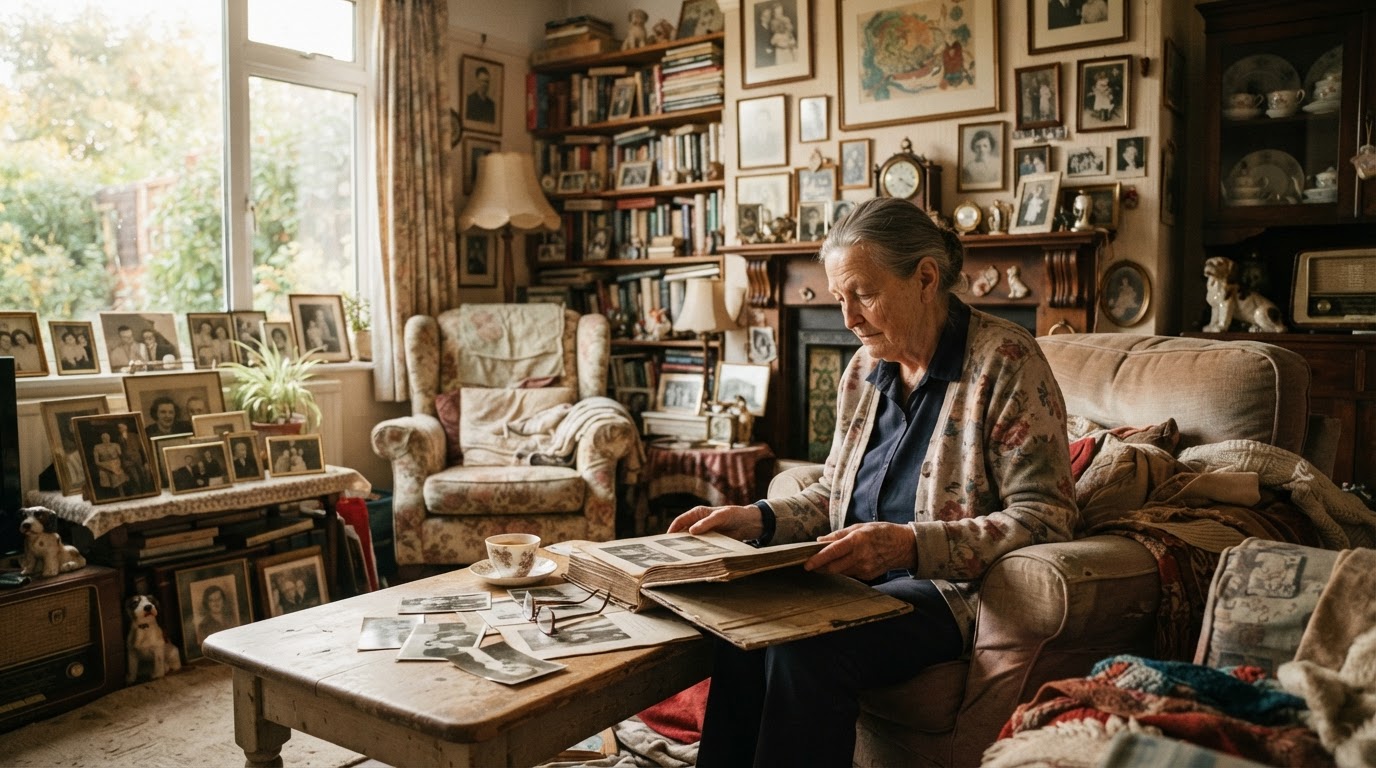
There's a particular weight that settles into a longtime home, and it isn't measured in square footage. It's measured in the rooms where a family grew up, the garden someone tended for decades, the marks on a doorframe, the ordinary routines that accumulated into a whole life. A home that's been loved for a long time carries all of that. And sometimes — not because of a crisis, not because of a number on a statement, but because of a slow recognition — a homeowner begins to feel that the home is asking more than they can give it. Not too much space. Too much meaning. Too much upkeep. Too much of a life that isn't quite the life being lived anymore. That weight is real, and it deserves to be treated as the real issue, not pushed aside in favor of a simple calculation.
The practical and the emotional are the same conversation
It's tempting to separate these — to handle the maintenance as a practical matter and the memories as an emotional one, as though they don't affect each other. But in a longtime home, they're inseparable. The reason the upkeep has become a burden is partly that it's physically demanding and partly that maintaining it feels like maintaining the life the home was built around. The reason sorting through belongings is so hard is partly the volume of them and partly what each one holds. A useful decision doesn't pick one of those and ignore the other. It accounts for the practical demands and the emotional ones together, because that's how the person living in the home actually experiences them.
What the home is actually asking
The practical side is usually clearer once it's named. A yard that needs tending, a roof that needs attention, rooms that are heated and cleaned but not used, a layout that asks more of a body than it used to. Those are concrete, and they have concrete answers — outside help, adaptations, a different property, a simpler arrangement. The emotional side is subtler, and it's worth being honest about what it is: the home is holding a version of the household that no longer exists, and keeping it up can feel like being responsible for a life that's already changed. That's not a failing. It's a recognition, and it deserves to shape the decision rather than be overridden by it.
“The home isn't too big. It's too full — of a life that was, of a life that is, and of the gap between them. That's not a problem to solve. It's a situation to understand.”
Gradual, not sudden
One of the cruelest frames for these decisions is the idea that they have to happen all at once — that recognizing a home has become too much means immediately listing it, emptying it, and leaving. For most homeowners in this situation, that's the worst version of the right answer. The useful path is almost always gradual: beginning to sort what's here, beginning to reduce what the home asks, beginning to imagine what a smaller or simpler arrangement might actually look like. A home can be thinned, adapted, or prepared over months or years. The decision can be made deliberately, in stages, with the memories respected at each one rather than discarded in a single upheaval.
Respecting what the home held
Honoring a home's meaning doesn't require keeping it unchanged forever. It can mean photographing the rooms, preserving the stories, distributing the meaningful belongings to the people who'll value them, or simply taking the time to say a goodbye that the house deserves. For some, it means staying, and letting the home settle into a smaller, quieter version of itself. For others, it means choosing a new place that can hold a next chapter without pretending the last one didn't happen. Neither dishonors what came before. Both can be done with care.
Questions worth asking
- What is the home actually asking — in upkeep, in effort, in emotional weight — and how much of that still matches what the household can give?
- Could any of the practical demands be eased — with help, adaptation, or a different use of the space — without leaving?
- What does the home hold that deserves to be preserved, and how could that be honored whether or not the house stays?
- Is the right pace gradual — sorting, reducing, adapting over time — and what would make that sustainable?
- What would a good next arrangement look like — not the easiest or the most efficient, but the one that respects both the person and the home?
This article provides general educational information, not individualized financial, tax, or real estate advice, nor grief or mental-health counseling. Property, downsizing, and estate decisions should be evaluated with appropriately qualified professionals based on individual circumstances.
Related paths
These Jumpcity capabilities may be relevant to this situation.
AI tools were used in preparing this article. Jumpcity is responsible for its published content.
Continue exploring
Guides & Tools for Your Next Step.
Explore practical resources to understand your options, compare tradeoffs, and prepare for what comes next.
Sale Readiness Planner
Organize the decisions, documents, preparation tasks, and timing involved in getting a home ready to sell.
Open the PlannerSelling a Long-Held Family Home
Understand the financial, practical, and family decisions involved in selling a home you've owned for many years.
Read the GuideDownsizing Cost Comparison
Compare current and next-home ownership costs, estimated sale proceeds, purchase expenses, and cash remaining after a modeled move.
Compare OptionsFamily Transition Planner
Center the parent's preferences, responsibilities, and timing in one shared place.
Open the PlannerRelated insights
The Family Home After the Children Leave
When the last child moves out, the home that was built around a full household starts asking different questions. Some are practical — space, cost, upkeep. Others are about what the home is now for.
When the Home You Love No Longer Fits the Life You're Living
The home that once made life easier can gradually become harder to live in. When that happens, the question isn't always whether to sell — it's whether the home can continue supporting the life you want to live.
When an Inherited Home Becomes a Family Decision
An inherited property often becomes a question for everyone who shares it. Ownership, memories, costs, and different ideas about the future all arrive at once — and the first useful step is rarely a sale.
Useful context is worth sharing.
Not sure which path fits your situation?
What Happens After You Start
You share your situation. Complete the assessment — about three minutes, no obligation.
A person reviews it. Someone at Jumpcity reads what you shared to understand your goals.
We follow up with context. We reach out with relevant options and an appropriate next step.
A short, guided assessment · No obligation
A Path for Every Move.