
Life & Property
When Siblings Disagree About the Family Home
When a family property passes to several heirs, the decision rarely belongs to one person. Different priorities, distances, and financial pressures turn a single asset into a family conversation — and the first useful step is understanding the options, not picking one.
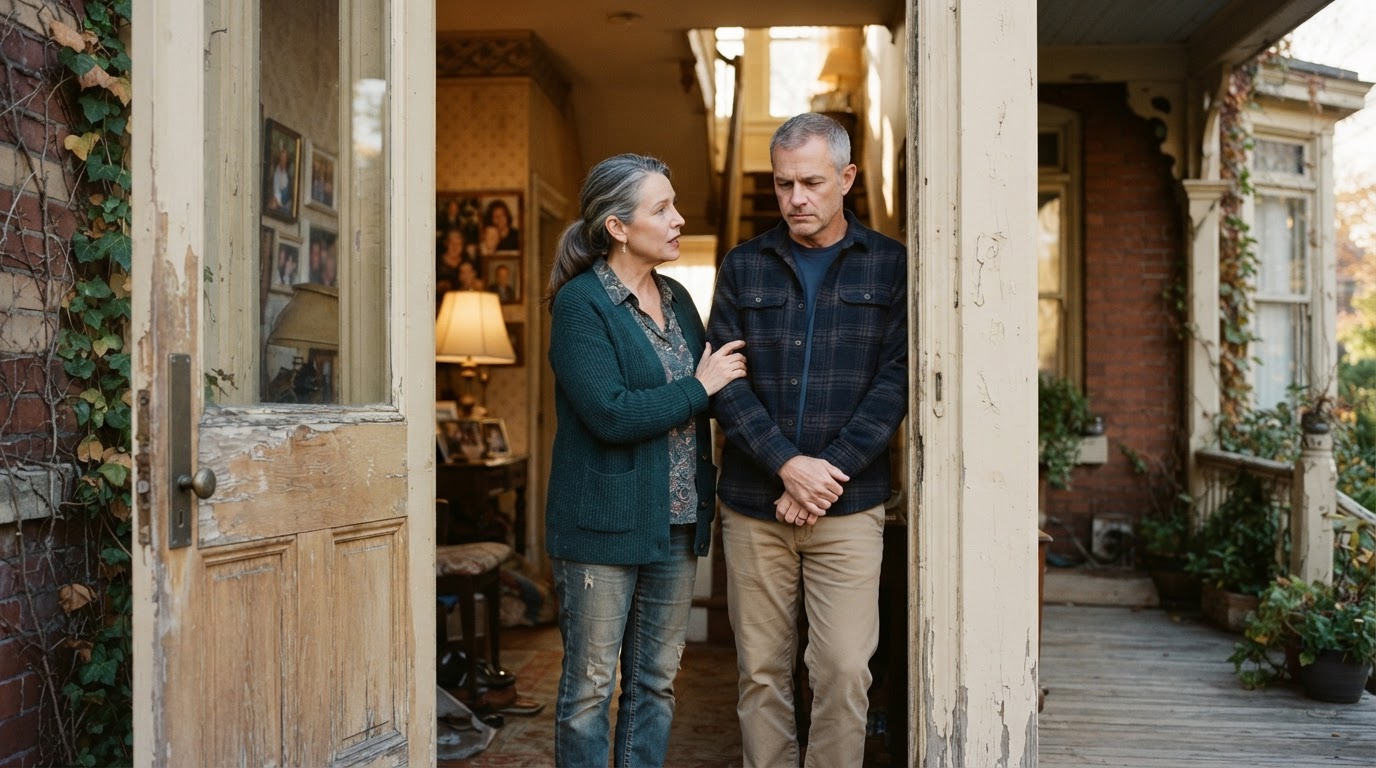
When a family home passes to several heirs, it rarely arrives as a single, shared decision. It arrives as several — one for each person who now owns a piece of it, each carrying a different relationship to the house, a different financial situation, and a different idea of what the property should become. The sibling who lives nearby feels the carrying costs and the upkeep. The sibling across the country sees mainly a number on a statement. A third may feel the weight of a childhood home in a way the others don't. Disagreement, in other words, isn't a failure of the process — it's the normal starting point. The question is how a family moves through it.
The decision belongs to more than one person
The first thing to understand is who actually has authority over the decision — and that's often more complicated than 'the heirs.' Ownership may be split, but the legal structure — a will, a trust, a probate process, the way a deed is titled — determines what's possible and what each person's say actually amounts to. A family's intentions don't always match the legal reality. Before debating what to do, it helps to understand what the structure allows, and who has the authority to decide within it. That's often a question for a qualified professional, not a family meeting.
What the disagreement is usually about
Sibling disagreements about a family home tend to fall into a few recognizable patterns, and naming the actual source of conflict is usually more useful than arguing about the conclusion.
Carrying costs and who bears them
One sibling may be paying the taxes, insurance, and upkeep while others wait for a sale. That imbalance — financial and emotional — is one of the most common sources of friction. An honest accounting of what the property costs, and who's currently covering it, can reframe a conversation that's been stuck in the abstract.
Emotional weight, unevenly felt
A childhood home carries different meanings for different people. One sibling may want to keep it in the family precisely because of those memories. Another may find that staying in it — or even owning it — is more painful than productive. Neither is wrong. But a decision that treats those feelings as irrelevant tends to produce a rift that outlasts the property.
Different financial pressures
Heirs often have very different needs for the proceeds. One may be counting on a sale to fund a next step. Another may have no immediate need and prefers to hold. A third may want to buy the others out. The property is the same; the situations around it are not.
The options, when the family can't agree
- Sell and divide the proceeds — the most common resolution when no one can or wants to carry the home alone.
- One heir buys out the others and keeps the home, with the price and terms structured fairly.
- Hold jointly for a defined period — until the market, the family, or a milestone makes the next step clearer.
- Rent the property to cover carrying costs while the family decides — an option that brings its own responsibilities.
- Bring in a neutral professional — a mediator, an estate attorney, or a fiduciary — to help the family see the options clearly rather than argue about them.
“The goal isn't to win the argument about the house. It's to understand the options well enough that the family — not the house — decides what happens next.”
The cost of staying stuck
An inherited property left in limbo carries real costs — taxes, insurance, maintenance, and the slow deterioration of an unoccupied or under-managed home. Those costs accrue while the family debates, and they tend to erode the very asset everyone is arguing over. There's also a human cost: a disagreement about a house can harden into a rift between siblings that lasts far longer than the property does. Moving deliberately isn't the same as rushing. But a family that can't find a path forward often ends up with the worst version of every option — costs accruing, relationships fraying, and a decision eventually made under pressure rather than by choice.
Questions worth asking as a family
- Who legally has authority over the decision, and what does the ownership structure actually allow?
- What is the property costing to carry right now, and who is bearing that cost?
- What does each person most need from the outcome — financially, emotionally, practically?
- Is there an arrangement — a buyout, a hold, a sale — that could meet more than one of those needs at once?
- What would help the family see the options clearly: shared information, a neutral professional, or simply more time?
This article provides general educational information, not individualized legal, tax, or estate-planning advice. Ownership, probate, and buyout decisions should be evaluated with qualified professionals based on individual circumstances.
A Guide for the Conversation the Whole Family Shares.
When a property decision belongs to more than one person, the conversation is the work. This guide organizes the questions a family faces when several adults share a decision about a home — who has a say, what each person needs, the money picture, how you talk together, and how a decision actually gets made. Check off what you’ve talked through, add notes, and download or print a clean copy to bring to the conversation. Nothing you enter is sent or stored.
Family Communication Guide
Coordinating Expectations Across Adult Family Members
When a property decision belongs to more than one person, the conversation is the work. This guide organizes the questions a family faces when several adults share a decision about a home — who has a say, what each person needs, the money picture, how you talk together, and how a decision actually gets made. It's an organizing tool, not a determination of what anyone should do.
Bring it to the family
Download or print a clean copy of this guide — with your notes and checkmarks — to bring to a family conversation. Nothing is sent or stored; the file is created in your browser.
Progress
0 / 22
prompts you’ve talked through. The goal isn’t to finish every item — it’s to surface what matters before the family commits to a path.
What this guide is — and isn’t
This guide provides general educational information, not individualized legal, tax, estate-planning, or real estate advice. Ownership, probate, and property decisions should be evaluated with appropriately qualified professionals based on individual circumstances.
Companion to: When an Inherited Home Becomes a Family Decision
Related paths
These Jumpcity capabilities may be relevant to this situation.
AI tools were used in preparing this article. Jumpcity is responsible for its published content.
Continue exploring
Guides & Tools for Your Next Step.
Explore practical resources to understand your options, compare tradeoffs, and prepare for what comes next.
When a Home Has More Than One Decision-Maker
Understand how shared ownership, different priorities, and family responsibilities affect property decisions — and how to move forward together.
Read the GuideShared Priorities Worksheet
Record each person's priorities, open questions, and points of agreement in one place — without forcing agreement or deciding who is right.
Open the WorksheetFamily Transition Planner
Center the parent's preferences, responsibilities, and timing in one shared place.
Open the PlannerInherited a Property — Where Do You Start?
Organize what you know, what you owe, and the questions that deserve attention before a transaction.
Read the GuideRelated insights
When an Inherited Home Becomes a Family Decision
An inherited property often becomes a question for everyone who shares it. Ownership, memories, costs, and different ideas about the future all arrive at once — and the first useful step is rarely a sale.
After Losing a Spouse, the Home Can Become a Different Place
Losing a partner changes what a home is — who it holds, what it costs to keep, and how it feels to live in. There's rarely a right timeline for the property decisions that follow, and rarely a reason to make them quickly.
When the Home You Love No Longer Fits the Life You're Living
The home that once made life easier can gradually become harder to live in. When that happens, the question isn't always whether to sell — it's whether the home can continue supporting the life you want to live.
Useful context is worth sharing.
Not sure which path fits your situation?
What Happens After You Start
You share your situation. Complete the assessment — about three minutes, no obligation.
A person reviews it. Someone at Jumpcity reads what you shared to understand your goals.
We follow up with context. We reach out with relevant options and an appropriate next step.
A short, guided assessment · No obligation
A Path for Every Move.