
Life & Property
When a Longtime Homeowner Is Ready for Something Different
Not every property transition begins with a problem. Sometimes a homeowner simply wants a different life — and that's a legitimate reason to reconsider a home. The useful question is what 'different' should actually look like.
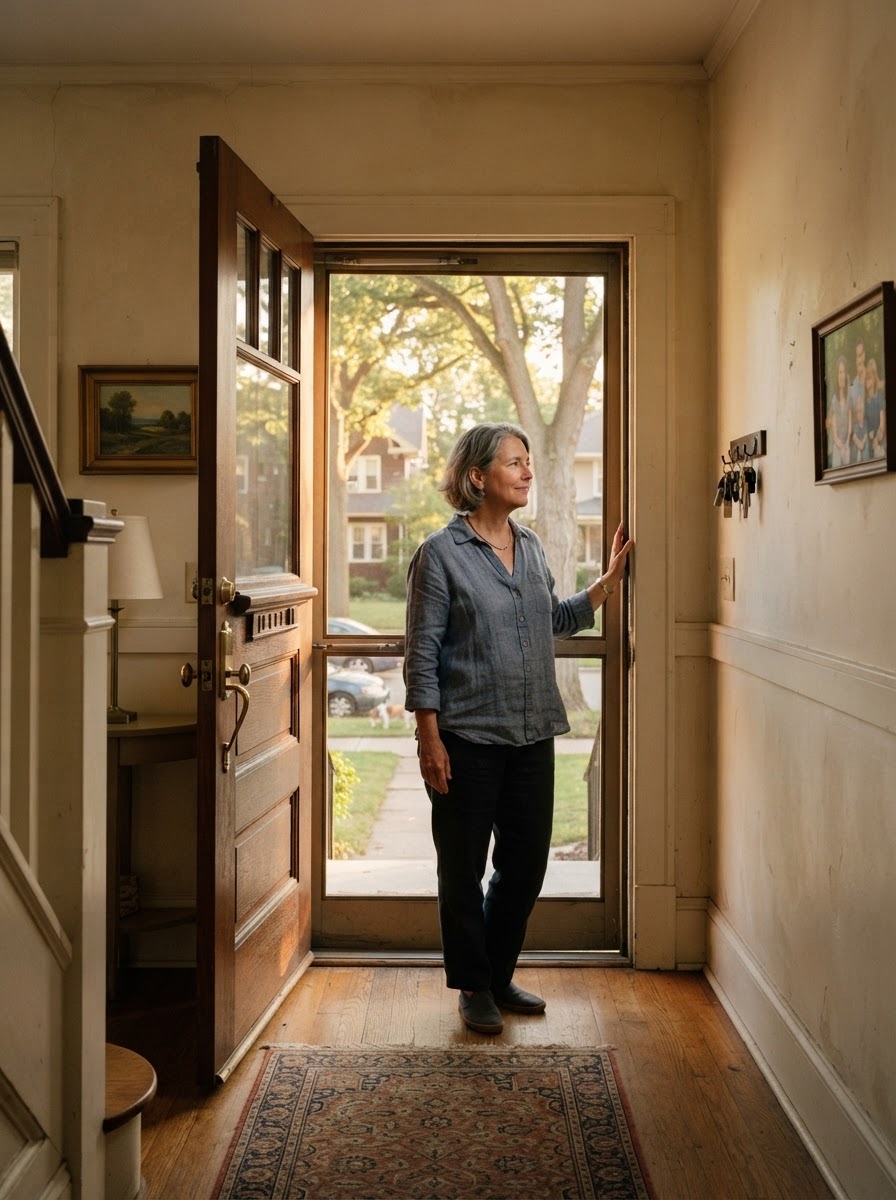
Most conversations about property transitions begin with a problem — a change in health, a divorce, an inheritance, a financial pressure. But a significant number of them don't. A homeowner who's lived in the same place for twenty or thirty years may simply, one day, be ready for something different. A different town, a different pace, a different kind of home, a life built around something the current one doesn't offer. There's no crisis. There's no urgency. There's just a quiet, accumulated sense that the next chapter might be lived somewhere — or in some way — that this home doesn't provide. And that's a completely legitimate reason to reconsider where you live. The useful question isn't whether the reason is 'serious enough.' It's what 'different' should actually look like.
What 'something different' usually means
When a longtime homeowner says they're ready for a change, the change usually points at one of a few real things — and naming the actual one is more useful than reaching for the most visible answer, which is often 'a smaller house.'
A different location
Sometimes the change is geographic — a preference for a different climate, a different community, a place closer to the things the household now has time for, or simply a place that feels like the right setting for the next chapter rather than the last one. A new location can offer a life the current one can't, and that's worth weighing honestly against what the current one holds.
A different pace or set of obligations
Sometimes the change is about what the home asks of its owner. A property that was a pleasure to maintain may have become a quiet obligation, and a different home — one that asks less, or asks in different ways — can buy back time and energy the current one consumes. That's not a failure of the current home. It's a recognition that what was worth maintaining for one chapter may not be for the next.
A different kind of life
And sometimes the change is the least concrete and the most real — a desire for a life built around something the current home doesn't support. A more walkable neighborhood, a community organized around different interests, a setting that fits a different identity or set of goals. The home is fine. The life around it is what's being reconsidered, and the home is the lever for the change.
“Wanting a different life isn't a weak reason to move. It's the reason most voluntary moves actually happen — and it deserves the same honesty as any crisis.”
What the current home is still holding
Even a voluntary move means leaving something behind, and the honest version of the decision accounts for what the current home provides that the new one wouldn't. A rooted community, a mortgage rate worth holding, a familiarity that took decades to build, the particular comfort of a place that's simply yours — these are real, and they're worth weighing against what 'different' would provide. A move that gains a new location and loses a hard-won life may or may not be worth it, and the only way to know is to see both sides clearly rather than reaching for the change because it's the most visible option. Some homeowners who consider a voluntary move discover, after an honest look, that what they wanted could be achieved by adapting the current home or its surroundings rather than leaving it. Others find that the move is genuinely the right answer. Both are legitimate conclusions — what matters is that the decision is made with the full picture rather than the first impulse.
The freedom of a move that isn't forced
There's something worth naming about voluntary transitions that's easy to miss: they have the advantage of time. A homeowner facing a crisis often has to decide quickly, under pressure, with limited options. A homeowner who's simply ready for a change can wait for the right property, the right market, the right moment — or can decide that the current home, adapted, is the right answer after all. That freedom is a resource worth using well. The worst version of a voluntary move is the one made on impulse, before the full picture is clear. The best version is the one made deliberately, with the current home understood and the next chapter genuinely imagined.
Questions worth asking
- What is the change actually pointing at — a location, a pace, a kind of life — and which of those does a new home genuinely provide?
- What does the current home still hold that the new one wouldn't, and is that worth keeping?
- Could any of what's wanted be achieved by adapting the current home or its life rather than leaving?
- What would the right next home look like — not the easiest to find, but the one that genuinely fits the next chapter?
- Given that there's no urgency, what would a deliberate, unhurried version of this decision look like?
This article provides general educational information, not individualized financial, tax, or real estate advice. Relocation and lifestyle decisions should be evaluated with appropriately qualified professionals based on individual circumstances.
Related paths
These Jumpcity capabilities may be relevant to this situation.
AI tools were used in preparing this article. Jumpcity is responsible for its published content.
Continue exploring
Guides & Tools for Your Next Step.
Explore practical resources to understand your options, compare tradeoffs, and prepare for what comes next.
Selling a Long-Held Family Home
Understand the financial, practical, and family decisions involved in selling a home you've owned for many years.
Read the GuideSale Readiness Planner
Organize the decisions, documents, preparation tasks, and timing involved in getting a home ready to sell.
Open the PlannerDownsizing Cost Comparison
Compare current and next-home ownership costs, estimated sale proceeds, purchase expenses, and cash remaining after a modeled move.
Compare OptionsKeep-or-Sell Scenario Worksheet
Compare what selling your property could make available today with what keeping it might require — and potentially produce — over time. Rental cash flow, estimated equity, and estimated sale proceeds are shown as three different measures.
Open the WorksheetRelated insights
When Downsizing Is About More Than Square Footage
Downsizing is often treated as a math problem — fewer rooms, smaller payment. But the homeowners considering it are usually after something less measurable: freedom, simplicity, proximity, or a life that fits differently.
When Retirement Changes What You Need From Home
Retirement reshapes the economics of a household — income, time, location, and the daily purpose of a home all change at once. The useful question isn't whether to move, but what the home is now for.
When the Home You Love No Longer Fits the Life You're Living
The home that once made life easier can gradually become harder to live in. When that happens, the question isn't always whether to sell — it's whether the home can continue supporting the life you want to live.
Useful context is worth sharing.
Not sure which path fits your situation?
What Happens After You Start
You share your situation. Complete the assessment — about three minutes, no obligation.
A person reviews it. Someone at Jumpcity reads what you shared to understand your goals.
We follow up with context. We reach out with relevant options and an appropriate next step.
A short, guided assessment · No obligation
A Path for Every Move.