
Housing & Markets
When Rising Insurance Costs Change the Economics of Owning a Home
Homeowners insurance is not merely a closing expense. It is an ongoing factor in whether a property remains affordable — and for some households, it has become the cost that changes everything else.
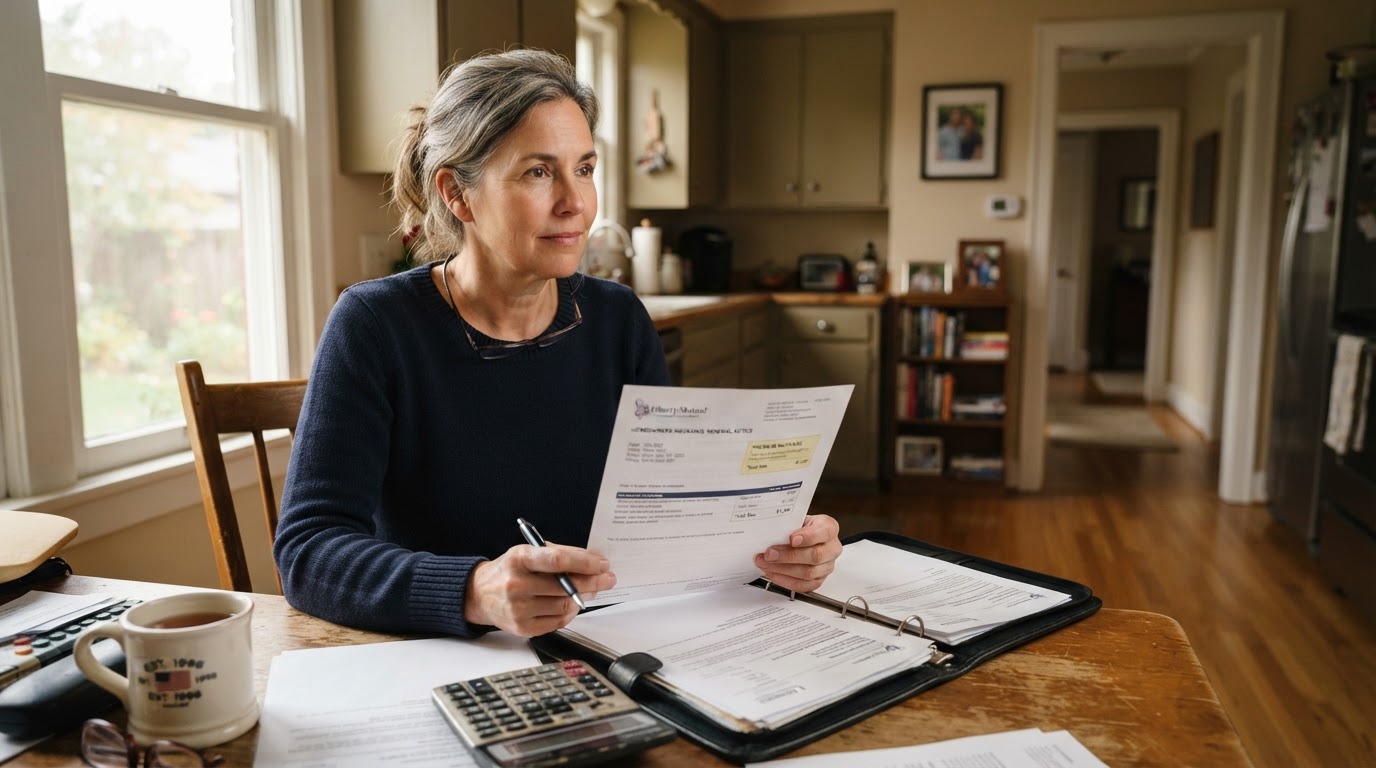
For most of the years a household has owned its home, insurance was a line item — bundled into the monthly payment, renewed automatically, noticed only when the bill arrived and forgotten again soon after. It was a cost, but a stable one, and a small one relative to the mortgage. Then the renewal notice came, and the premium had risen sharply — not by a few percent, but by enough to matter. Another year, another increase. A deductible that had been manageable became substantial. A coverage limit that had seemed adequate began to look thin. And for a household whose income was not rising at the same pace, the cost that had been background became foreground, and the home that had been affordable began to ask a different question.
Insurance is not a closing cost — it is a continuing one
Homeowners insurance is often thought of as a one-time purchase, a box to check at closing. But it is a recurring expense that the household pays for as long as it owns the home, and like property taxes, it can rise over time in ways the original purchase decision did not anticipate. A premium that fit the budget when the home was bought can become a meaningful burden years later, particularly for a household on a fixed income or one whose other costs have also risen. The home has not changed. The cost of keeping it has.
“The mortgage is fixed. The insurance is not. Over the years of ownership, that difference compounds.”
Why premiums rise, and why they rise unevenly
Insurance premiums reflect the risk an insurer is pricing and the cost of covering it, and both can move over the life of a home. Premiums can rise with broader claims experience, with the rising cost of repairs and reconstruction (which itself rises with labor and materials inflation), and — in some regions especially — with the growing frequency or severity of weather-related losses. A home in a region where wildfire, flood, wind, or storm exposure has increased may see sharper increases than one in a region where those risks are stable, because the insurer is repricing the territory. The same home, in the same condition, can carry a very different insurance cost depending on where it is and what has happened to the risks around it.
It is not only the premium that moves. Deductibles can change, sometimes shifting to a percentage of the home's value rather than a fixed dollar amount, which can materially raise the out-of-pocket cost of a claim. Coverage limitations can narrow — exclusions for certain perils, caps on certain categories of loss, or requirements for separate policies for risks a standard policy once covered. And in some regions, the issue is not only cost but availability: insurers may withdraw from a market, reduce new policies, or make coverage difficult to obtain at any price, leaving households to find alternatives at higher cost or with less coverage. Insurance is not a single number. It is a set of terms, and those terms can erode the protection the household is paying for even as the price of it rises.
When insurance changes the ownership decision
For most households, rising insurance is an unwelcome cost that gets absorbed — another strain on the monthly budget, another reason the home costs a little more to keep than it did last year. But for some, it becomes the factor that changes the ownership decision itself. A household whose insurance has risen enough to strain a fixed income may begin to weigh whether the home remains sustainable — whether the carrying cost, with insurance now a larger share of it, still fits the life being lived. A household in a region where coverage has become scarce or very expensive may face a harder question: not whether to keep the home, but whether keeping it remains practical when the cost of insuring it has become its own burden. And a household with a financed home, where insurance is required by the lender, may find that coverage challenges create urgency that did not exist before — because a home cannot be held without it.
The second-home dimension
These dynamics can be especially sharp for second homes and properties in higher-risk regions, where insurance markets have moved most. A vacation property, a seasonal home, or a home in a wildfire-prone or coastal area can see insurance changes that shift the entire economics of owning it — turning a property that was a reasonable retreat into one whose carrying cost no longer matches its use. For some households, this is the conversation that begins a reassessment of whether the second home still makes sense, or whether its costs have outgrown the role it plays in the family's life.
Questions worth asking
- How has the insurance premium, deductible, and coverage changed over the years of ownership, and what share of the carrying cost has it become?
- Is the home in a region where weather or other risks have made coverage more expensive or harder to obtain, and what does that trajectory suggest for the future?
- Does the current policy still cover what the household assumes it covers, or have exclusions or limits narrowed the protection?
- If insurance costs continue to rise, at what point would the carrying cost of the home no longer fit the household's income — and is that point approaching?
- Would a different home — in a different location, of a different size, or with different exposure — carry a more sustainable insurance cost, and how does that compare to the cost of remaining?
A cost that decides the future of the home
Insurance is rarely the first thing a household thinks of when it considers a property decision, and for most, it never becomes the deciding factor. But for a growing number of homeowners — especially those in regions where risk has risen, those on fixed incomes, and those carrying second homes — it has become exactly that: the cost that, more than the mortgage or the taxes, changes whether keeping the home still makes sense. Understanding insurance as a continuing, moving cost — not a settled one — is what allows a household to see the full economics of ownership, and to recognize when a rising premium is also a signal worth taking seriously. The home is the same. The cost of keeping it may not be.
This article provides general educational information, not individualized insurance, financial, or real estate advice. Insurance coverage, premiums, and availability vary by insurer, region, and policy, and should be evaluated with appropriately qualified professionals and licensed insurance providers.
Related paths
These Jumpcity capabilities may be relevant to this situation.
AI tools were used in preparing this article. Jumpcity is responsible for its published content.
Continue exploring
Guides & Tools for Your Next Step.
Explore practical resources to understand your options, compare tradeoffs, and prepare for what comes next.
Property Holding Cost Estimator
Estimate monthly and multi-period holding costs for a property you still own.
Explore the EstimateWhat Is Waiting Costing You?
See estimated ongoing property expenses over different time periods — without pressure to sell faster.
Read the GuideKeep-or-Sell Scenario Worksheet
Compare what selling your property could make available today with what keeping it might require — and potentially produce — over time. Rental cash flow, estimated equity, and estimated sale proceeds are shown as three different measures.
Open the WorksheetDownsizing Cost Comparison
Compare current and next-home ownership costs, estimated sale proceeds, purchase expenses, and cash remaining after a modeled move.
Compare OptionsRelated insights
Why Property Taxes Can Change the Cost of Staying or Moving
A property tax bill is not a fixed feature of a home — it is a living cost that can rise with value, change with ownership, and shift sharply when a household moves. Understanding it changes the arithmetic of both decisions.
When Maintaining a Home Becomes More Expensive Than Expected
A home ages whether the household notices or not. Deferred maintenance, aging systems, and the creeping cost of keeping a property standing can quietly reshape whether owning it still makes sense — and what it will take to sell it.
The Growing Financial Tradeoffs of Owning a Second Home
A second home can be a retreat, a gathering place, or a long-term plan — and it can become a financial commitment that no longer fits the household it was built around. When the costs grow, the question of keeping it grows with them.
Useful context is worth sharing.
Not sure which path fits your situation?
What Happens After You Start
You share your situation. Complete the assessment — about three minutes, no obligation.
A person reviews it. Someone at Jumpcity reads what you shared to understand your goals.
We follow up with context. We reach out with relevant options and an appropriate next step.
A short, guided assessment · No obligation
A Path for Every Move.