
Housing & Markets
The Growing Financial Tradeoffs of Owning a Second Home
A second home can be a retreat, a gathering place, or a long-term plan — and it can become a financial commitment that no longer fits the household it was built around. When the costs grow, the question of keeping it grows with them.
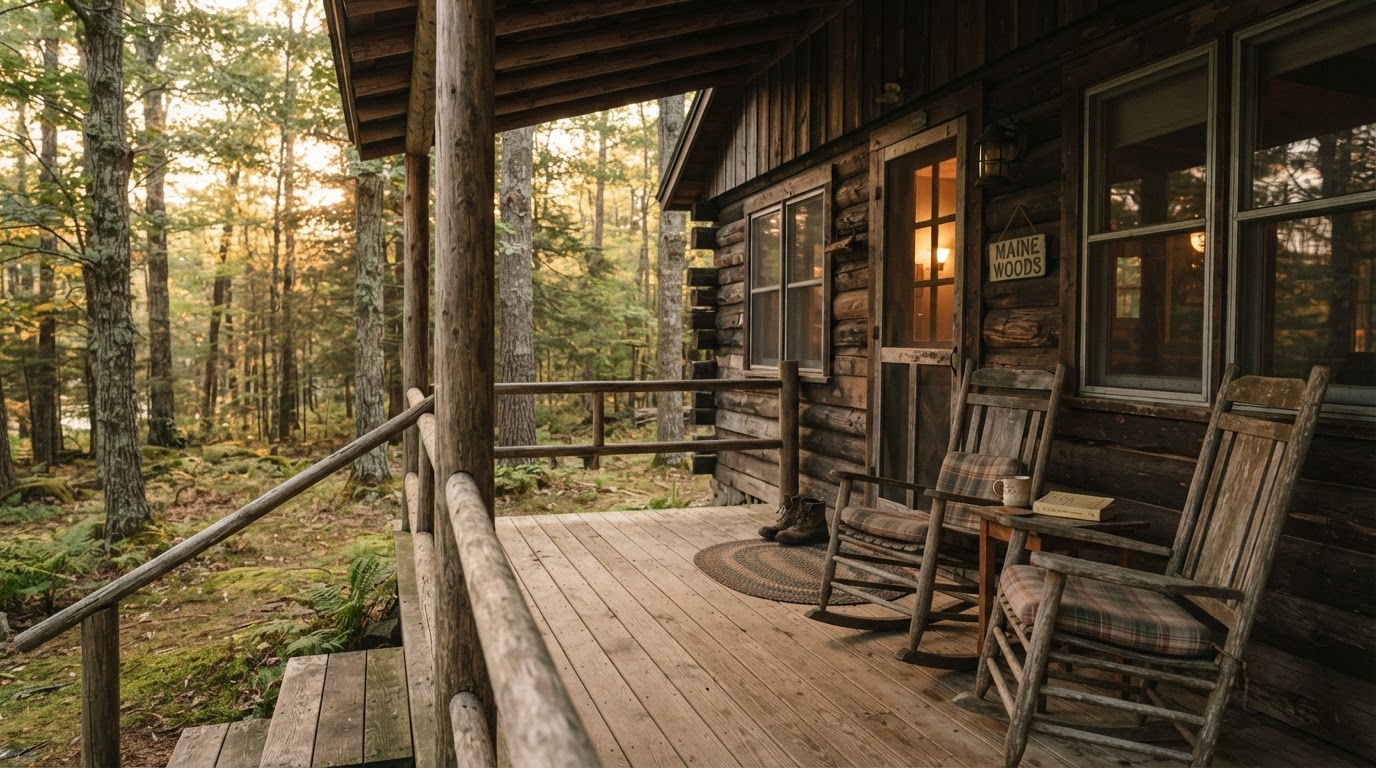
It often starts with a clear intention. A cabin in the mountains for the summers. A place near the water for the family. A home in a town the household has loved for years, bought as a retreat, a gathering point, a future retirement option — a property that made sense for the life the family was living when it was purchased. For years, it worked. The family used it, the costs were manageable, the mortgage — if there was one — was steady, and the second home was a source of rest and continuity. Then, gradually, something changed. The costs grew. The use shifted. The life that the property was built around is no longer quite the life being lived. And the second home, which once felt like an asset, has begun to ask a question the household did not expect to face.
A second home is a second set of carrying costs
The most fundamental thing to understand about a second home is that it is, in economic terms, a second household — with a second mortgage, a second property tax bill, a second insurance policy, a second set of utilities, and a second home's worth of maintenance and upkeep. Each of these is a continuing cost, paid for as long as the property is owned, whether the household uses the home or not. A second home that is used for a few weeks a year still costs a full year to keep, and the cost does not pause when the family is not there. For a household whose income or whose use of the property has changed, the carrying cost can grow from a manageable expense into a meaningful burden, and the gap between what the home costs and what it provides can widen without any single dramatic event — just the quiet accumulation of costs the household no longer uses enough to justify.
“A second home does not rest when you are not there. It costs the same, all year, whether you use it or not.”
Insurance and risk in the places people retreat to
Second homes are often located in places that are beautiful precisely because they are exposed to the elements — coastlines, forests, mountains, arid regions — and these are the same places where insurance costs have risen most sharply in recent years. A vacation property in a wildfire-prone area, a coastal home in a storm-exposed region, or a cabin in a remote location can face insurance premiums that have grown substantially, deductibles that have shifted to percentage-based structures, or — in some cases — coverage that has become difficult to obtain at any price. For some second-home owners, insurance has become the cost that most changes the economics of keeping the property, because it is the cost that has moved fastest and that is least under the household's control. A retreat that was affordable when insured at one premium can become a financial strain when insured at another, and the household has to weigh whether the use the property provides still justifies the cost it now asks.
The rental income assumption
Many second homes are purchased, or kept, with the expectation that short-term rental income will offset some or all of the carrying cost — that the home will pay for itself, or nearly, when the family is not using it. This can be true, and for some households it is a sound arrangement. But rental income is not a guaranteed or passive revenue stream, and the assumptions behind it deserve real scrutiny. Income depends on occupancy, which depends on demand, season, competition, and the management required to maintain a listing. Expenses are ongoing — cleaning, turnover, maintenance, the wear that renters accelerate, platform fees, and the management time the household either provides itself or pays someone else to provide. Vacancy is a real cost, not an absence of one: the home still costs the same in the weeks it is not rented. And in some markets, regulation has changed what short-term rental is even permitted to do. A household that assumed the rental income would cover the costs may find, on honest accounting, that it covers some of them some of the time, and that the gap between assumption and reality is the gap the household has been quietly funding.
There is an important distinction to draw here. A second home used personally, even one that is sometimes rented, is different from an investment property purchased primarily for rental income or appreciation. The two are treated differently for tax and financing purposes in many jurisdictions — a household that uses a property personally for part of the year and rents it for part may face different rules than one that rents it full-time — and the decision to keep or sell each is driven by different questions. This article is about the second home: the retreat, the family place, the property whose costs the household has been carrying and whose role in the family's life has shifted. The question for that property is not whether it is a good investment. It is whether the cost of keeping it still fits the use the household now makes of it.
When the use changes, the cost changes meaning
The most common reason a second home becomes a question is not that the costs have risen — though they often have — but that the use has changed. The children have grown and no longer gather there. The travel that was easy in one life stage has become harder in another. A retirement that was planned around the property has arrived, and the property no longer fits the retirement the household is actually living. A health change has made the travel or the upkeep more difficult. The home, which was once central to the family's rhythm, has become a place the family visits less, while the costs continue as if the use had not changed. This is the moment the question arrives: not whether the home is valuable, but whether the value the household gets from it — in use, in rest, in family gathering — still matches what it costs to keep. Sometimes the answer is yes, and the home is worth carrying through a new chapter. Sometimes the answer is no, and the cost of keeping it has become the cost of a life the family is no longer living.
Questions worth asking
- What does the second home actually cost per year — mortgage, taxes, insurance, utilities, maintenance, and management — and how has that changed since it was purchased?
- How much does the household actually use the property now, compared to when it was bought, and has the use shifted enough to change what the cost is worth?
- If rental income is expected to offset costs, what is the real net income after vacancy, management, maintenance, and fees — and does it cover what it was assumed to?
- Has insurance for the property become more expensive or harder to obtain, and what does that trajectory suggest about the future carrying cost?
- Would selling the property free resources the household could use for the life it is now living — and what would it cost, in loss of the retreat, to do so?
The cost of a life the family is no longer living
A second home is often bought for a life the family was living and kept for a life it no longer is. The costs continue; the use does not always keep pace. For some households, the home remains worth what it costs — a treasured place that earns its keep in rest and gathering and continuity, and that the household is right to carry forward. For others, the gap between what the property costs and what it provides has widened, quietly and over years, until the home has become a financial commitment in service of a life the family has moved beyond. Recognizing that gap — and weighing it honestly, against both the cost of keeping the property and the cost of letting it go — is what allows a household to make a decision that serves the life it is actually living, rather than the one the property was originally bought to support. A second home can be a retreat. It can also be a cost. Which it is, at any given moment, is the question worth asking.
This article provides general educational information, not individualized financial, tax, lending, insurance, or real estate advice. Second-home ownership, rental income, and the tax and financing treatment of personal-use versus investment property vary by jurisdiction and should be evaluated with appropriately qualified professionals.
Related paths
These Jumpcity capabilities may be relevant to this situation.
AI tools were used in preparing this article. Jumpcity is responsible for its published content.
Continue exploring
Guides & Tools for Your Next Step.
Explore practical resources to understand your options, compare tradeoffs, and prepare for what comes next.
Keep-or-Sell Scenario Worksheet
Compare what selling your property could make available today with what keeping it might require — and potentially produce — over time. Rental cash flow, estimated equity, and estimated sale proceeds are shown as three different measures.
Open the WorksheetKeep Your Current Home or Sell It?
Organize sale proceeds and rental operating assumptions — and tell cash flow from return apart.
Read the GuideOverlapping Housing Costs Estimator
Estimate what carrying two homes could cost during an overlap, across a few durations.
Explore the EstimateProperty Holding Cost Estimator
Estimate monthly and multi-period holding costs for a property you still own.
Explore the EstimateRelated insights
When Rising Insurance Costs Change the Economics of Owning a Home
Homeowners insurance is not merely a closing expense. It is an ongoing factor in whether a property remains affordable — and for some households, it has become the cost that changes everything else.
Why the Monthly Mortgage Payment Doesn't Tell the Whole Story
Principal and interest are only part of what a home costs. Taxes, insurance, maintenance, and the slow accumulation of major repairs all shape whether a property stays affordable over the years you own it.
How Housing Market Conditions Change the Choice Between Selling and Renting
Renting out a home instead of selling can make sense — and it can quietly become its own burden. Market conditions shape which path makes sense, and so does the household's appetite for the ongoing work of being a landlord.
Useful context is worth sharing.
Not sure which path fits your situation?
What Happens After You Start
You share your situation. Complete the assessment — about three minutes, no obligation.
A person reviews it. Someone at Jumpcity reads what you shared to understand your goals.
We follow up with context. We reach out with relevant options and an appropriate next step.
A short, guided assessment · No obligation
A Path for Every Move.