
Housing & Markets
Why Waiting for the Perfect Housing Market Can Become Its Own Risk
Waiting for the right moment to move can feel prudent. But a delay is not the absence of a decision — it is a decision with its own costs, carried risks, and quiet consequences that compound while the household waits.
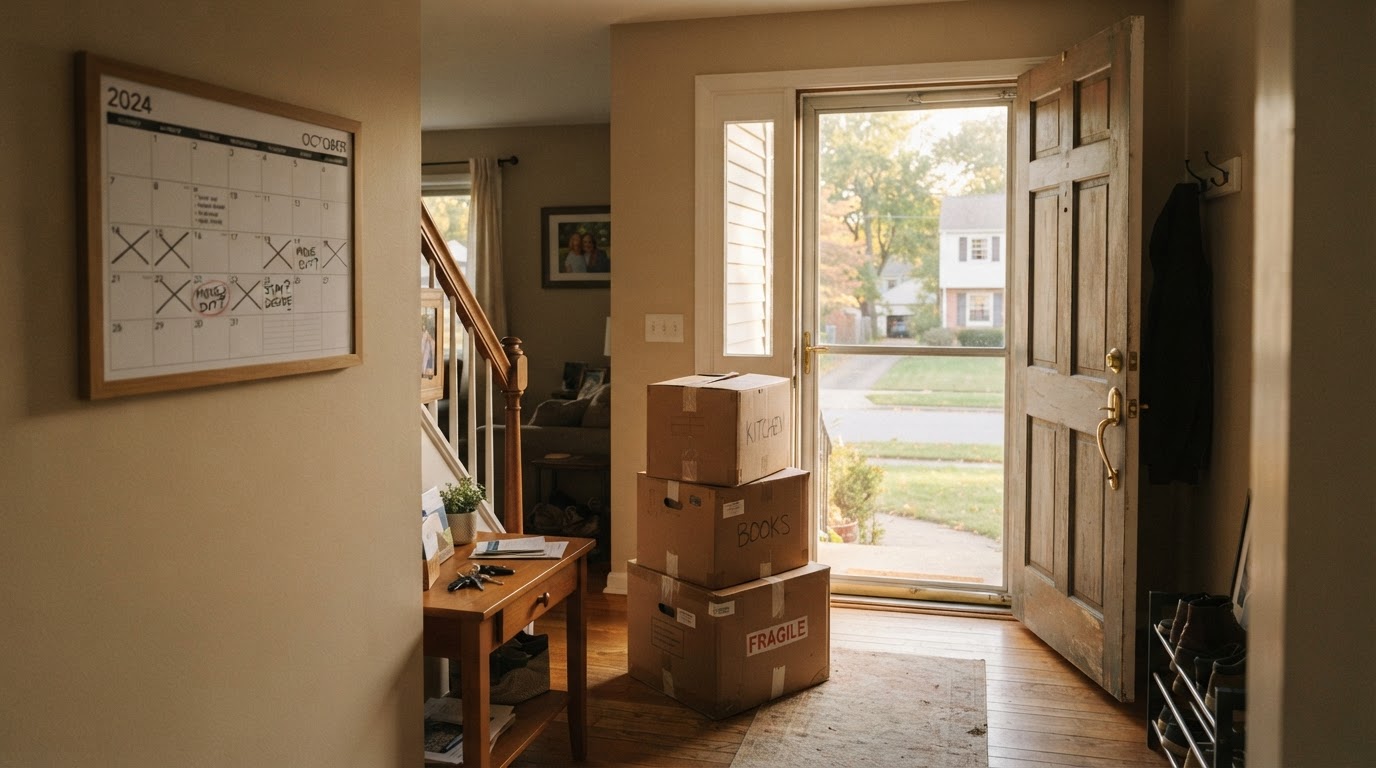
A household is ready to move. The life situation is clear — the home no longer fits, the relocation is needed, the next chapter is waiting. And yet they hesitate, because the market is not what they hoped it would be. Rates are higher than they were. Prices are uncertain. The headlines suggest waiting might pay. So the household waits, holding the decision in suspension, telling themselves they will move when the conditions are right. Months pass. The conditions do not arrive. The home still does not fit, the relocation is still needed, and the life that was waiting to begin has been waiting all this time. Waiting, they have come to realize, is not the absence of a decision. It is a decision they are making every day, and it has its own costs.
Waiting is a decision with a price
The appeal of waiting is that it feels free — it feels like choosing not to act, like preserving the option to act later under better conditions. But a household that waits is not standing still. It is paying the carrying costs of the current situation — the mortgage, the taxes, the insurance, the maintenance, the utilities — for every month the decision is held. It is paying, too, in the life it is not living: the space not gained, the location not reached, the adjustment not made, the next chapter not begun. And it is accepting a risk that is easy to underestimate: that the conditions it is waiting for may not arrive, or may arrive in a form that does not help, or may arrive after the cost of waiting has exceeded the benefit of the timing.
“A decision to wait is a decision to pay today's costs for tomorrow's hope. It is not free, and it is not safe.”
The carrying cost the household keeps paying
The most concrete cost of waiting is the carrying cost of the current home — the monthly expense of keeping a property the household has decided no longer fits. Every month the decision is held is a month of mortgage interest, property taxes, insurance, and upkeep spent on a home the household has, in a sense, already decided to leave. For a household whose income or whose use of the property makes those costs manageable, this may be a reasonable price to pay for the option of better timing. But the costs accumulate, month after month, and they are real money — money that is being spent on a home that is not serving the household's life, in the hope that the market will eventually make a move more affordable. At some point, the cumulative carrying cost can exceed whatever savings a better timing might deliver, and the household that waited for the better moment may find that the waiting cost more than the moment was worth.
The life the household is not living
Less measurable but no less real is the cost of the life the household is delaying. A move made to accommodate a growing family is delayed while the family grows past the point the move was meant to serve. A relocation planned for a new chapter is postponed while the chapter that was supposed to begin waits on the other side of it. A downsizing decision meant to simplify life is held while the complications it was meant to relieve continue to compound. These are not financial costs in the way a carrying cost is, but they are costs the household pays — in stress, in cramped space, in a life lived in the wrong place for longer than necessary. A decision to wait is a decision to keep living the current arrangement for longer, and the question is whether the timing benefit is worth that ongoing human cost.
The replacement-home question
There is also the specific risk that the household waiting for a better selling market is also waiting into a better buying market — or a worse one. If the household is both selling and buying, the conditions it waits for on the sale side may move in the same direction as the conditions on the purchase side. A seller waiting for higher prices may find that the home they want to buy has also become more expensive, canceling the benefit. A seller waiting for lower rates may find that lower rates also bring more competition, driving the purchase price of the next home up. The market the household is waiting for is a market for both sides of the move, and a household that optimizes only the sale may find the purchase has moved against them in the meantime. Waiting is not a single-variable decision. It is a wager on the relationship between two markets, and that relationship is not guaranteed to improve.
When waiting is right, and when it is not
None of this means waiting is always the wrong choice. Sometimes the right answer genuinely is to wait — when the household's situation is stable, when the carrying costs are low, when the expected timing benefit is substantial and likely, and when the life the household is living in the meantime remains comfortable. Waiting can preserve flexibility, allow for better preparation, and let a household enter a transaction from a stronger position. But waiting is right when it is chosen with an honest accounting of its costs — when the household understands what it is paying to wait, what it is delaying by waiting, and what it is betting on by holding out for better conditions. Waiting chosen without that accounting — waiting by default, because the market has not yet aligned with the household's hopes — is where the risk lives. It is the waiting that no one notices has become its own cost until the cost has been paid for years.
Questions worth asking
- What is the monthly carrying cost of the current home, and how much has the household spent carrying it while waiting for better conditions?
- What life or situation is being delayed by the wait, and what is the cost of that delay — in stress, in space, in a life lived in the wrong place?
- Is the market the household is waiting for a market for selling, for buying, or both — and is the relationship between the two likely to improve?
- What is the household betting will improve, and how confident can anyone be that it will — and on what timeline?
- If the expected improvement does not arrive, what is the household's actual next step — and has that been weighed against the cost of waiting to see?
Acting and waiting both carry cost
The clarity that matters, in a market as uncertain as housing, is that every option has a price. Acting has its costs — a payment at a less-than-ideal rate, a sale at a less-than-peak price, the friction and risk of a transaction under imperfect conditions. Waiting has its costs too — the carrying expense of the current arrangement, the delay of the life the move was meant to enable, the risk that the hoped-for conditions never arrive, or arrive in a form that does not help. A household that weighs only the costs of acting will wait too long, because waiting looks free and is not. A household that weighs both honestly is the one best equipped to decide — not whether to time the market perfectly, which almost no one can, but whether the timing on offer is good enough for the life that is waiting to move, or whether the cost of waiting is the lower cost after all. The right decision is rarely the perfect one. It is the one that accounts for what both choices actually cost.
This article provides general educational information, not individualized financial, lending, tax, or real estate advice. Market timing and property decisions should be evaluated with appropriately qualified professionals based on individual circumstances and current market conditions.
Related paths
These Jumpcity capabilities may be relevant to this situation.
AI tools were used in preparing this article. Jumpcity is responsible for its published content.
Continue exploring
Guides & Tools for Your Next Step.
Explore practical resources to understand your options, compare tradeoffs, and prepare for what comes next.
What Is Waiting Costing You?
See estimated ongoing property expenses over different time periods — without pressure to sell faster.
Read the GuideProperty Holding Cost Estimator
Estimate monthly and multi-period holding costs for a property you still own.
Explore the EstimateSale Readiness Planner
Organize the decisions, documents, preparation tasks, and timing involved in getting a home ready to sell.
Open the PlannerSale Options Comparison
Compare two sale scenarios you enter across proceeds, timing, preparation, and terms.
Compare OptionsRelated insights
When Selling for Less Can Still Support a Better Next Move
A lower sale price is not always a loss. Sometimes it is the price of a faster, more certain, or simpler exit that lets a household move forward — and the best move is the one that serves the whole situation, not the headline number.
What Happens When Your Home's Value Changes but Your Plans Don't?
A household can plan a move around one set of numbers and arrive at another. When the market moves between the plan and the decision, the same intentions can produce different — and harder — choices.
How Mortgage Rates Change More Than Buying Power
A mortgage rate shapes what a buyer can afford, but it also shapes what existing owners are willing to do — and that second effect can matter as much as the first.
Useful context is worth sharing.
Not sure which path fits your situation?
What Happens After You Start
You share your situation. Complete the assessment — about three minutes, no obligation.
A person reviews it. Someone at Jumpcity reads what you shared to understand your goals.
We follow up with context. We reach out with relevant options and an appropriate next step.
A short, guided assessment · No obligation
A Path for Every Move.