
Relocation & Mobility
The Hidden Costs of Moving Between Two Homes
A move's price tag extends well beyond the sale and the purchase. Moving services, temporary housing, storage, utility overlap, deposits, and the disruption of daily life all add up. Understand what a relocation actually costs before budgeting only for the two transactions.
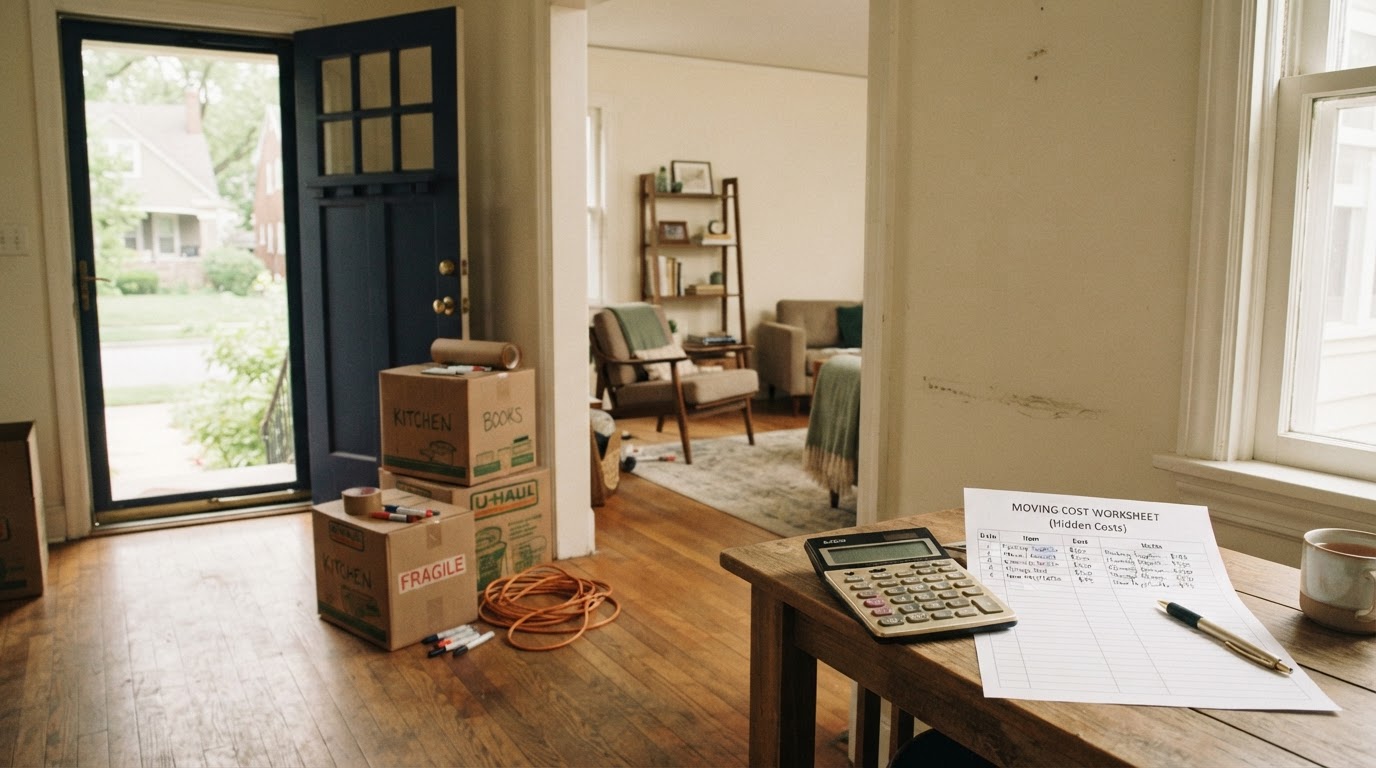
A household planning a relocation tends to focus, understandably, on the two big numbers: what they'll net from the sale and what the next home will cost. Those are the figures that anchor the plan. But between those two transactions sits a layer of costs that are less visible, less predictable, and often more consequential to the household's actual experience of the move than the headline figures suggest. Moving services, temporary housing, storage, utility overlap, deposits, travel, the disruption of daily life — each is real, each adds to the total, and together they can turn a relocation that looked affordable on a spreadsheet into one that costs more than expected.
The move itself
The physical act of moving between two homes is a significant expense in its own right. A long-distance move involves a moving company, a truck, packing materials, and possibly storage for belongings that won't fit in the next home immediately. If the household sells before buying, there may be two moves: one into temporary housing and another into the destination home. If the household buys before selling, the overlap may mean maintaining utilities and basic services at both properties for the duration. Each of these is a real, out-of-pocket cost that arrives during the transition — exactly the period when the household is also managing closing costs, deposits, and the setup expenses of a new home.
Temporary housing and the gap
When the sale and the purchase don't align perfectly, the gap between them has to be filled — and that costs money. A household that sells first may need a short-term rental, an extended-stay arrangement, or time with family while they search for the destination home. Storage for the household's belongings adds another cost. A household that buys first may carry two homes for longer than planned. The gap is not just a logistical inconvenience; it is a period of additional expense that the relocation budget needs to account for — and the longer the gap, the more it costs.
“The cost of a move isn't the sale price and the purchase price. It's everything in between — and the 'in between' is where budgets get surprised.”
Utility overlap, deposits, and the setup of a new home
Beyond the move itself, the setup of the destination home generates its own set of costs. Utility deposits and connection fees, the cost of furnishing or partially furnishing a new space, immediate repairs or improvements, and the overlap of utilities between the two homes during the transition period all contribute. None of these is catastrophic in isolation; together, they add up — and because they arrive while the household is also managing the expense of the move and, potentially, the carrying costs of two homes, they can strain a budget that was planned around the headline figures alone.
The cost of disruption
There is also a less tangible cost that is easy to overlook until it's being felt: the disruption to daily life. A relocation interrupts work routines, school schedules, social connections, and the ordinary rhythm of a household. For a family with children, a move may mean a school transition. For a working household, it may mean time off, a commute change, or a period of adjustment. These aren't dollar costs, but they affect the household's experience of the move and, in some cases, its finances — a parent who takes time off, a commute that costs more, a period of lower productivity. A realistic relocation budget accounts for the disruption, not just the transactions.
Questions worth asking
- What will the physical move actually cost — including movers, packing, storage, and the possibility of moving twice?
- If the sale and purchase don't align, what does temporary housing and storage cost during the gap, and how long could the gap extend?
- What setup costs — utilities, deposits, immediate repairs, furnishings — will the destination home require?
- How long will utilities and basic services overlap at both properties, and what does that cost per month?
- What is the cost of the disruption to work, school, and daily life, and is that cost included in the relocation budget?
This article provides general educational information, not individualized financial, tax, or real estate advice. Relocation budgeting and expense decisions should be evaluated with appropriately qualified professionals based on individual circumstances.
Related paths
These Jumpcity capabilities may be relevant to this situation.
AI tools were used in preparing this article. Jumpcity is responsible for its published content.
Continue exploring
Guides & Tools for Your Next Step.
Explore practical resources to understand your options, compare tradeoffs, and prepare for what comes next.
Overlapping Housing Costs Estimator
Estimate what carrying two homes could cost during an overlap, across a few durations.
Explore the EstimateThe Two-Mortgage Guide
Understand what it means to carry two homes at once — in plain language, with the right questions to ask.
Read the GuideKeep-or-Sell Scenario Worksheet
Compare what selling your property could make available today with what keeping it might require — and potentially produce — over time. Rental cash flow, estimated equity, and estimated sale proceeds are shown as three different measures.
Open the WorksheetKeep Your Current Home or Sell It?
Organize sale proceeds and rental operating assumptions — and tell cash flow from return apart.
Read the GuideRelated insights
Why Home Equity Doesn't Always Make Relocating Easy
A household can have substantial equity and still find a relocation financially difficult. Equity is not the same as the cash and the financing flexibility a move actually requires. Understand the gap — and what it means for a relocation.
Why Owning Two Homes Can Complicate a Relocation
Buying your next home before selling your current one can create overlapping payments, financial uncertainty, and unexpected timing pressure. Understand how these connected obligations shape relocation decisions — and what to weigh before taking them on.
Buying before selling: what carrying two mortgages really means
Moving into your next home before selling the current one can offer flexibility. It can also mean carrying two properties, two sets of housing expenses, and uncertainty about when the overlap ends. Here's how to evaluate whether the transition is workable.
Useful context is worth sharing.
Not sure which path fits your situation?
What Happens After You Start
You share your situation. Complete the assessment — about three minutes, no obligation.
A person reviews it. Someone at Jumpcity reads what you shared to understand your goals.
We follow up with context. We reach out with relevant options and an appropriate next step.
A short, guided assessment · No obligation
A Path for Every Move.